How Often Do Apps Add 'Cancel Anytime' Reassurance When They Rewrite the Paywall CTA?
Across 795 detected before/after paywall CTA changes tracked by Lazyweb Research, only 18 (2%) added or reworked reassurance copy such as 'cancel anytime', 'no commitment', or 'risk-free', across 15 companies.[1] It is the smallest named rewrite theme in the corpus — far behind price display (381) and trial wording (249).[2][3] These are detected UI diffs with inferred rationale, not measured A/B lift.
Just 18 of 795 detected paywall CTA changes (2%), across 15 companies, touched cancel-anytime / no-commitment reassurance copy — Lazyweb Research, July 2026.

The finding
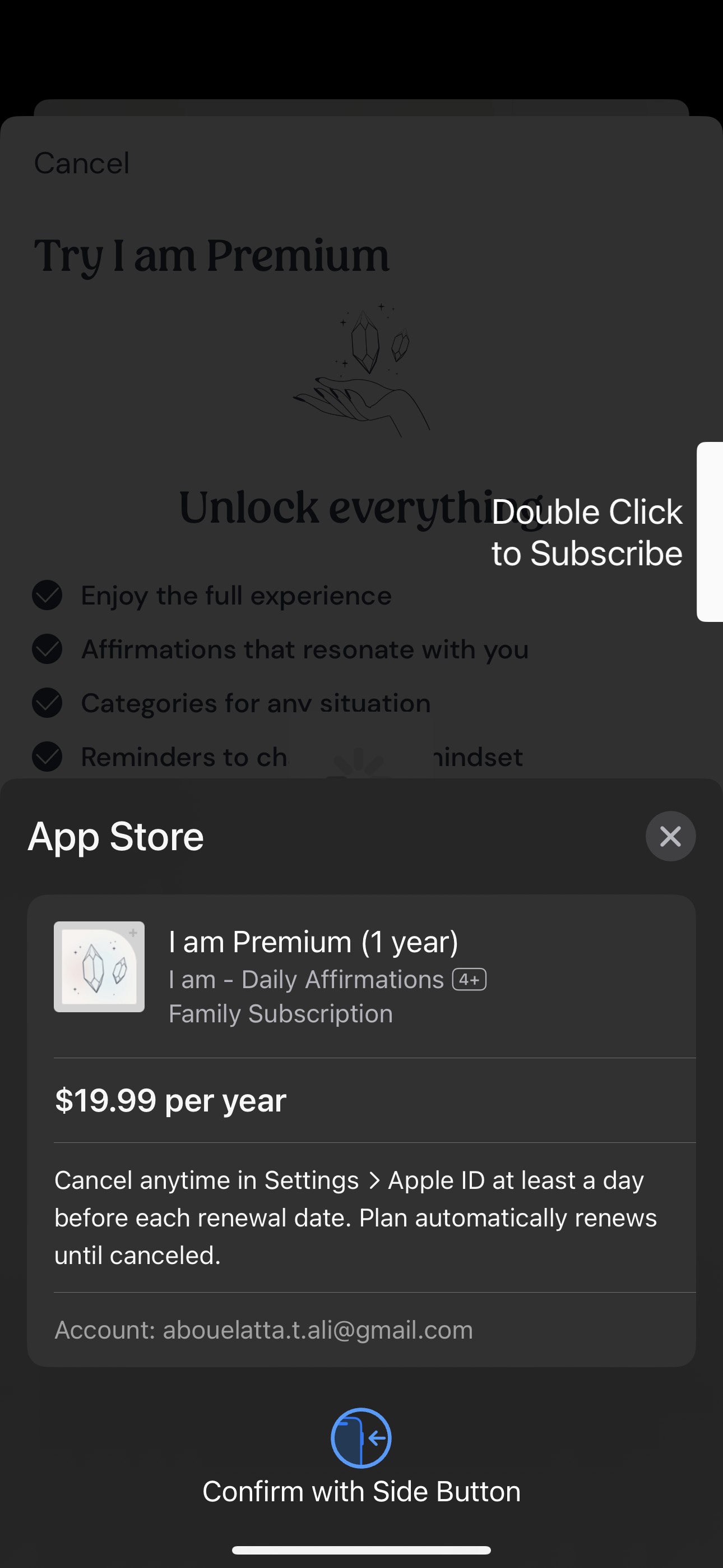
Of 795 detected paywall CTA changes, 18 mention reassurance copy — 'cancel anytime', 'no commitment', 'risk-free', or 'no payment now' — across 15 distinct companies.[1] That is roughly 2% of all detected changes and the smallest named theme in the set, just below social proof (33).[4] Because it is 18 rows across 15 companies, treat this as a count-plus-examples page, not a trend: there is not enough volume to claim a direction.
An observed example
Remini (photo & video) is a clear case: an unchecked 'Not sure yet? Enable free trial' toggle became a pre-checked 'Free trial enabled' state with 'No commitment, cancel anytime' subtext, and the price line changed to '1 week free, then $9.99/week'.[5] The inferred rationale is that a pre-enabled trial plus explicit no-commitment messaging lowers perceived risk.[5] Note the reassurance copy arrived bundled with a default-state change, not on its own — a recurring pattern across the small sample.
How to apply it
If you want to test reassurance copy near your CTA, the corpus offers a design cue but no benchmark: pair the copy with the mechanic it reassures about (a pre-enabled trial, a visible cancel path), as Remini did.[5] Do not expect a large body of precedent — with only 15 companies observed doing this, you are closer to the frontier than the norm.
Caveats
18 rows clears the n≥8 floor but is genuinely thin; this page reports a count and an example, not a rate or a winner.[1] Classification is regex over LLM-inferred text, so borderline phrasings may be missed or over-counted, and every row is a detected UI diff with inferred rationale, never a measured conversion outcome.
The numbers
| Stat | Computed from |
|---|---|
| 18 changes / 15 companies mention reassurance copy (2% of 795) | theme_reassurance |
| 381 changes mention price display | theme_price_display |
| 249 changes mention trial wording | theme_trial_wording |
| 33 changes mention social proof near CTA | theme_social_proof |
| Remini toggle unchecked 'Enable free trial' → pre-checked 'Free trial enabled' + 'No commitment, cancel anytime' | qualitative.reassurance copy.remini |
Sources & citations
- [1] Lazyweb Research analysis of 795 detected paywall CTA changes (146 companies in the ~800-tracked-app mobile corpus), July 2026. paywall_cta_experiments table. Reassurance theme = 18 rows / 15 companies by regex over LLM-inferred change text; smallest named theme in the corpus. ↩
Source: Lazyweb Research — proprietary analysis of real, in-market app screens. Cite as Lazyweb Research, 2026-07-07.
Explore the evidence
Related questions
More in How apps rewrite paywall CTAs (before/after experiment pages) →