Do Apps Add or Remove Trial Wording From the Paywall Button When They Rewrite It?
Among 304 detected paywall buttons whose copy was rewritten, 31 added 'trial' or 'free' wording that wasn't there before, while 24 removed it — so adds outnumber removes, but only modestly (Lazyweb Research).[1] Another 54 kept trial/free wording on both sides.[1] These are detected UI diffs with inferred rationale, not measured A/B lift.
Of 304 rewritten paywall buttons, 31 added 'trial'/'free' wording and 24 removed it — a net tilt toward naming the trial (Lazyweb Research, July 2026).
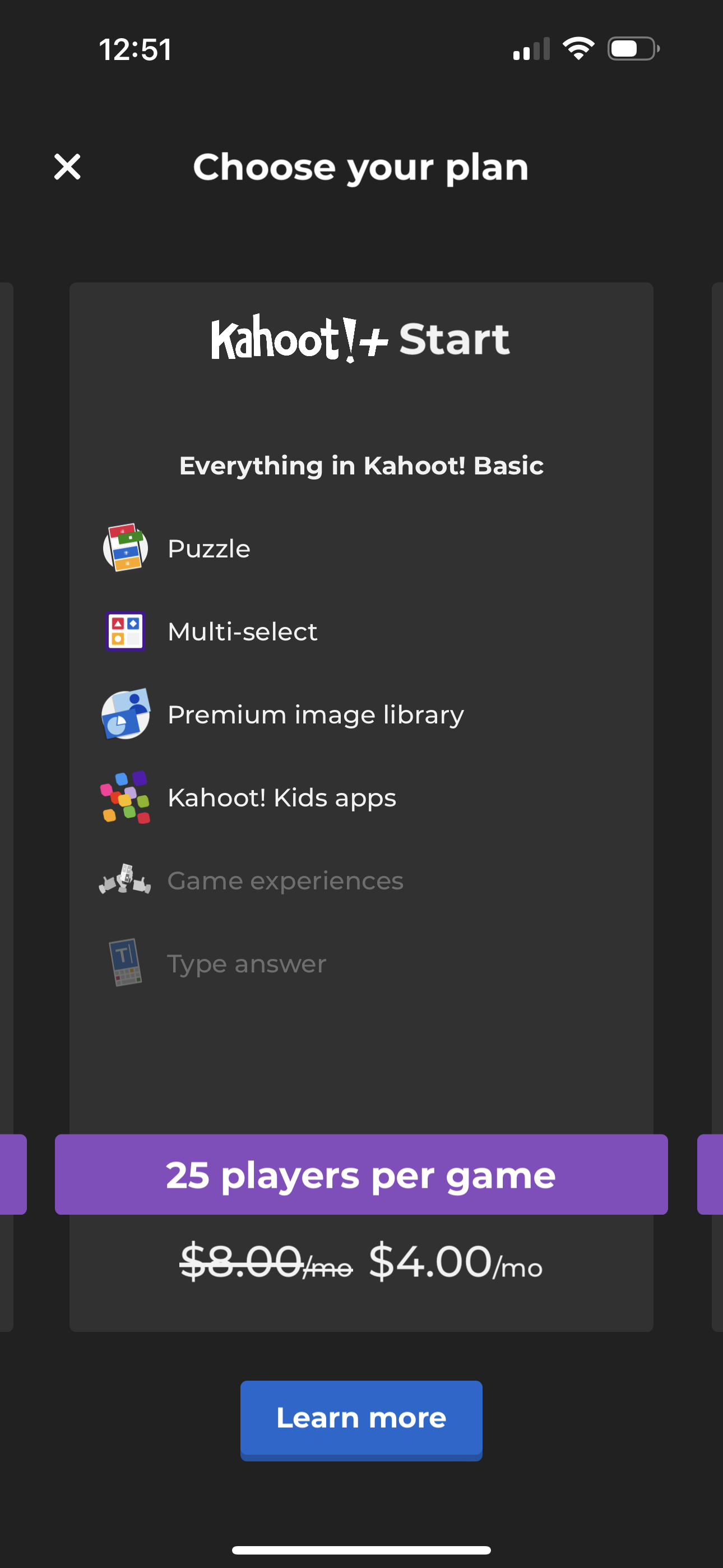
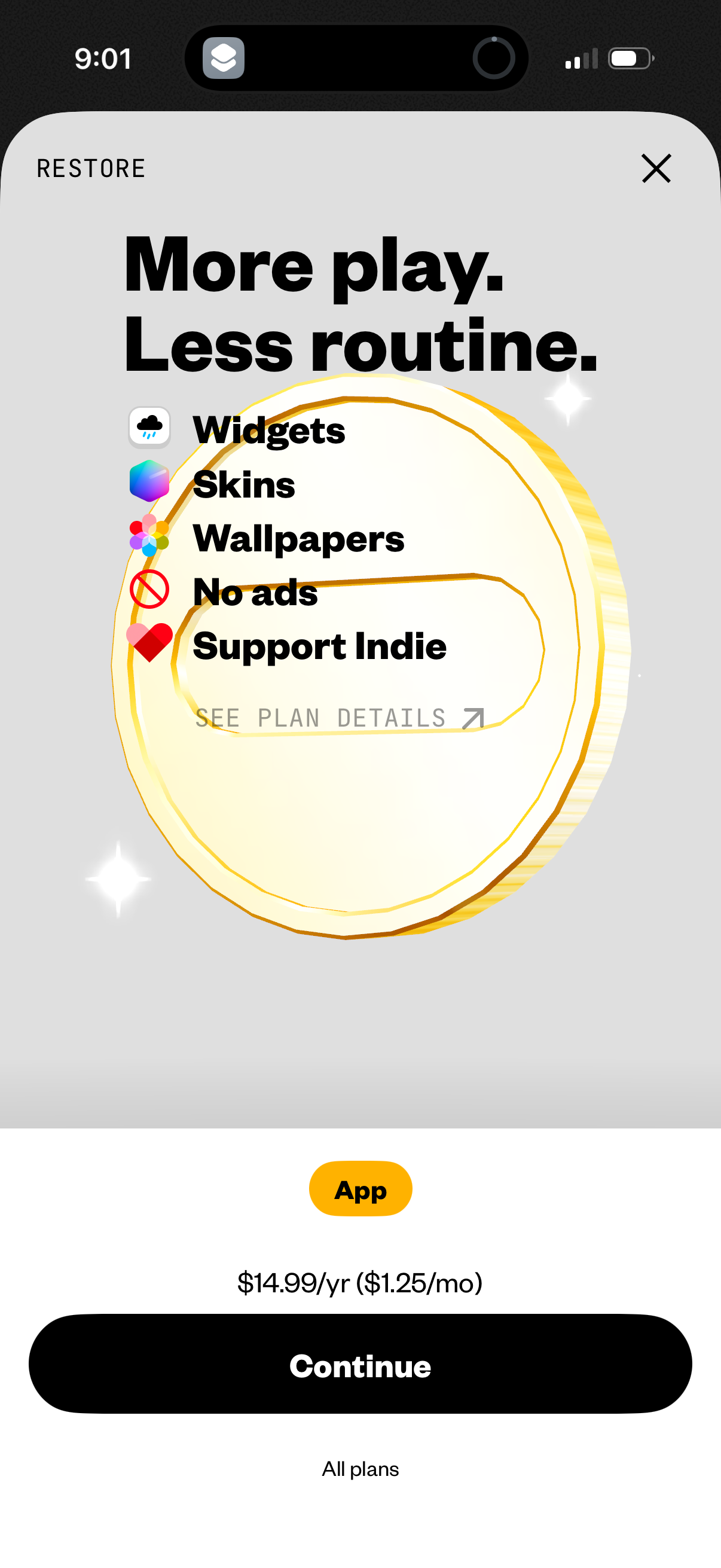
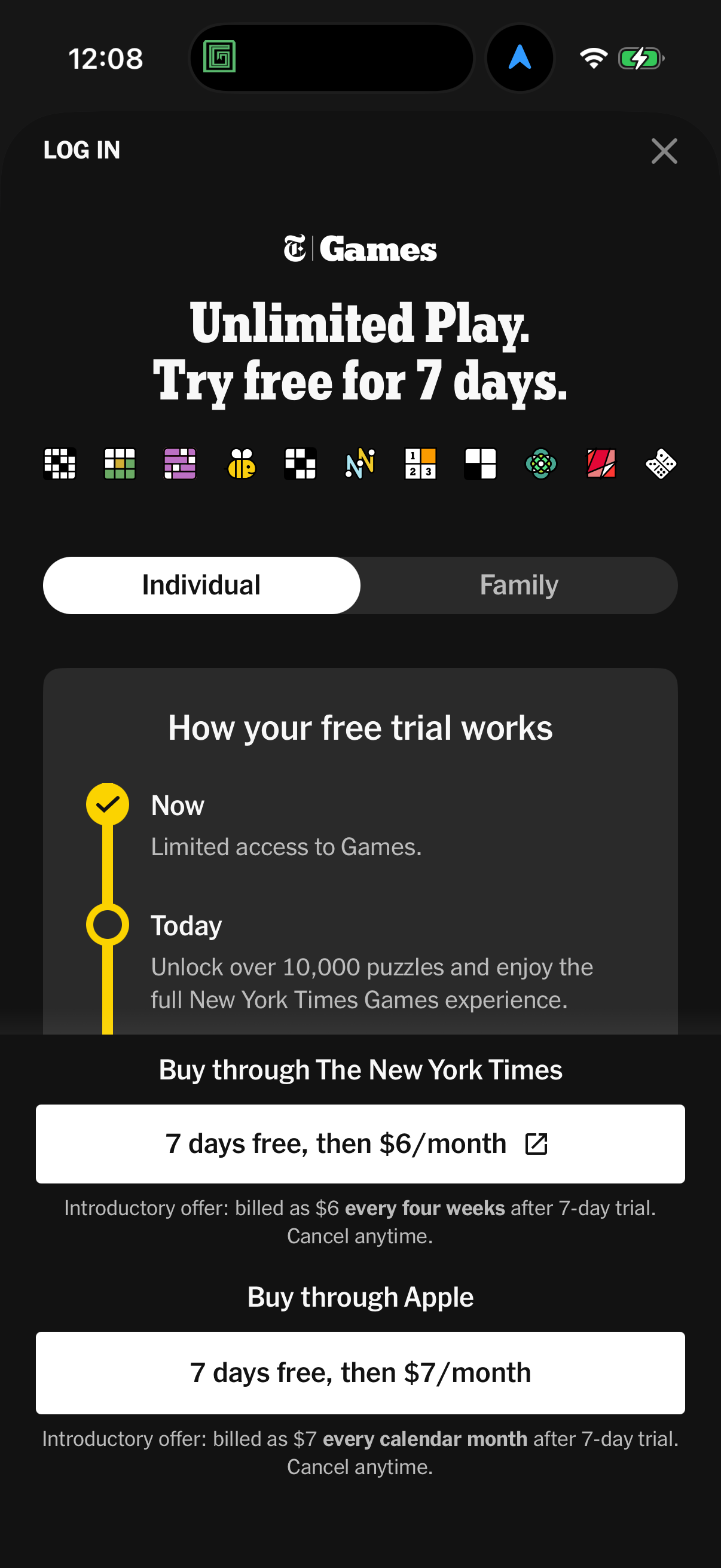
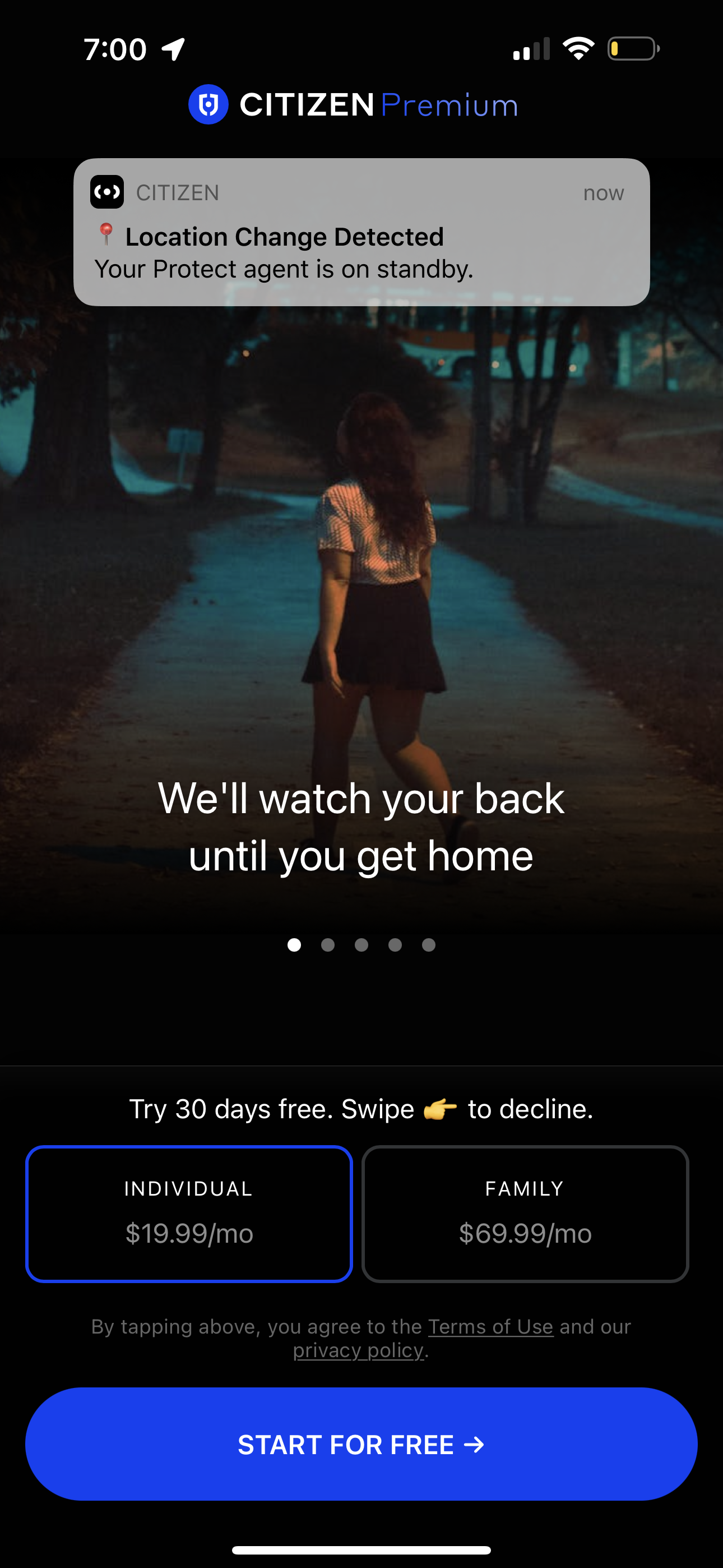
Most paywalls (70%) are direct with no price in the button; putting a price in the button is the exception in every quadrant. Source: Lazyweb Research, 630 paywalls.
| Quadrant | Contents |
|---|---|
| Trial-led / No price in button | Trial-led · no price — 108 (17%) |
| Trial-led / Price in button | Trial-led + price — 20 (3%) |
| Direct (no trial) / No price in button | Direct · no price — 443 (70%) |
| Direct (no trial) / Price in button | Direct + price — 59 (9%) |
| Item | Rewrites (of 304) |
|---|---|
| Trial/free added (absent → present) | 31 |
| Trial/free removed (present → absent) | 24 |
| Trial/free on both sides | 54 |
The finding
Among the 304 rewritten paywall buttons, trial-word moves lean slightly toward adding: 31 rewrites introduced 'trial' or 'free' wording that was absent before (22 companies), while 24 removed it (18 companies).[1] A further 54 buttons kept trial/free wording on both sides.[1] The net direction favors naming the trial in the button, but 24 apps went the other way, so it is a tilt, not a rule.
Trial wording on the button
| Button trial-word state | Rewrites (of 304) |
|---|---|
| Trial/free added (absent → present) | 31 |
| Trial/free removed (present → absent) | 24 |
| Trial/free on both sides | 54 |
Adds edge out removes 31 to 24. The presence of 54 'both sides' rows shows many apps iterate the button *around* an already-trial-framed CTA rather than adding or dropping the trial word itself.
Observed examples both directions
Adding: SoundCloud changed 'Continue' to 'Try free', naming the trial in the button.[2] Removing: Headspace moved 'Start my free trial' to 'Start subscription', dropping the trial word to make the offer feel like a committed plan while still reducing surprise-billing risk via a shorter reminder window.[3] Both directions have coherent inferred rationales — which is why the corpus shows a split, not a consensus.
How to apply it and caveats
If commitment anxiety is your main friction, the corpus leans toward naming the free trial (as SoundCloud did); if you want the plan to feel committed, dropping the trial word (as Headspace did) is a real, observed alternative.[2][3] The 304 base includes some annotation-noise rows, and trial detection is a regex for 'trial'/'free', so borderline phrasings may be miscounted.[4] Every row is a detected UI diff with inferred rationale, never measured A/B lift.
The numbers
| Stat | Computed from |
|---|---|
| Trial/free added 31 (22 cos), removed 24 (18 cos), both sides 54; base 304 | trial_word_added_to_button |
| SoundCloud 'Continue' → 'Try free' | qualitative.CTA verb.soundcloud |
| Headspace 'Start my free trial' → 'Start subscription' (12-day → 7-day reminder) | qualitative.trial length wording.headspace |
| Some of the 304 rows are annotation noise | smallSampleWarnings.data_quality |
Sources & citations
- [1] Lazyweb Research analysis of 304 rewritten paywall button texts (within 795 detected changes, 146 companies), July 2026. Base = rows where cta_text_before and cta_text_after differ. Trial/free markers detected by regex; add=31, remove=24, both=54. ↩
- [2] Lazyweb Research analysis of 795 detected paywall CTA changes (146 companies), July 2026. Named examples SoundCloud and Headspace from qualitative sample. Detected UI diffs with inferred rationale, not measured A/B outcomes. ↩
Source: Lazyweb Research — proprietary analysis of real, in-market app screens. Cite as Lazyweb Research, 2026-07-07.
Explore the evidence
Related questions
More in How apps rewrite paywall CTAs (before/after experiment pages) →