What can consumer apps learn from Cal AI’s onboarding and paywall?
The useful patterns are concrete: demonstrate the core action, connect intake questions to an editable result, put optional decisions in recognizable places, and make the subscription decision inspectable. Cal AI’s capture supplies examples of those patterns, alongside friction and promises worth questioning. It does not prove that copying them will improve conversion. [1][2][3][4]
1. Show the core action early
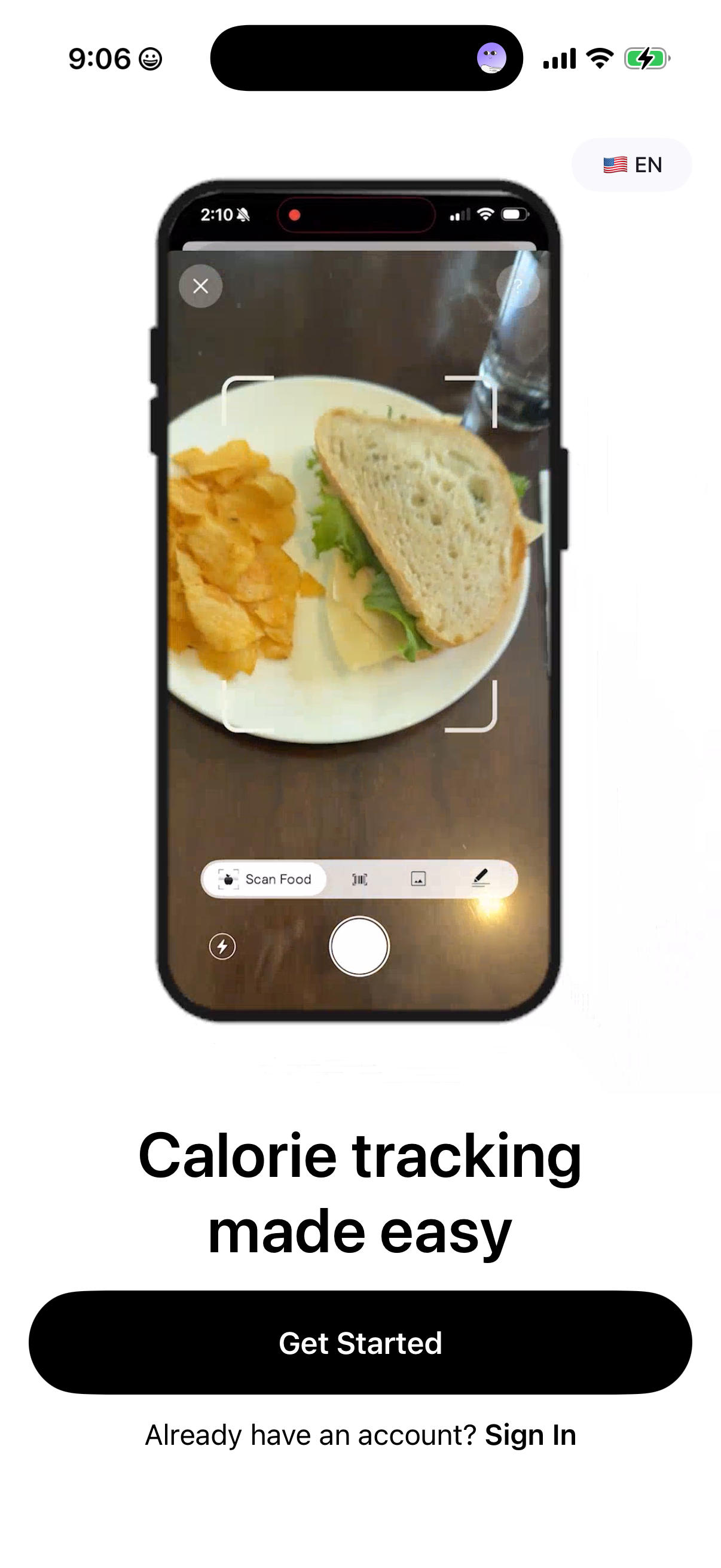
The welcome screen shows food being scanned rather than relying only on a written feature claim. A consumer app can similarly demonstrate its central interaction before asking for effort. The relevant question is whether the preview explains the job accurately, not whether the illustration looks impressive. [1]
2. Make personalization visible in the result
The path collects profile, goal and preference information, then shows a plan with editable output values. For another app, identify exactly which output changes with each input. Remove questions that do not earn their place, and avoid presenting recommendations as validated merely because they look personalized. [2]
3. Treat optionality as a real product decision
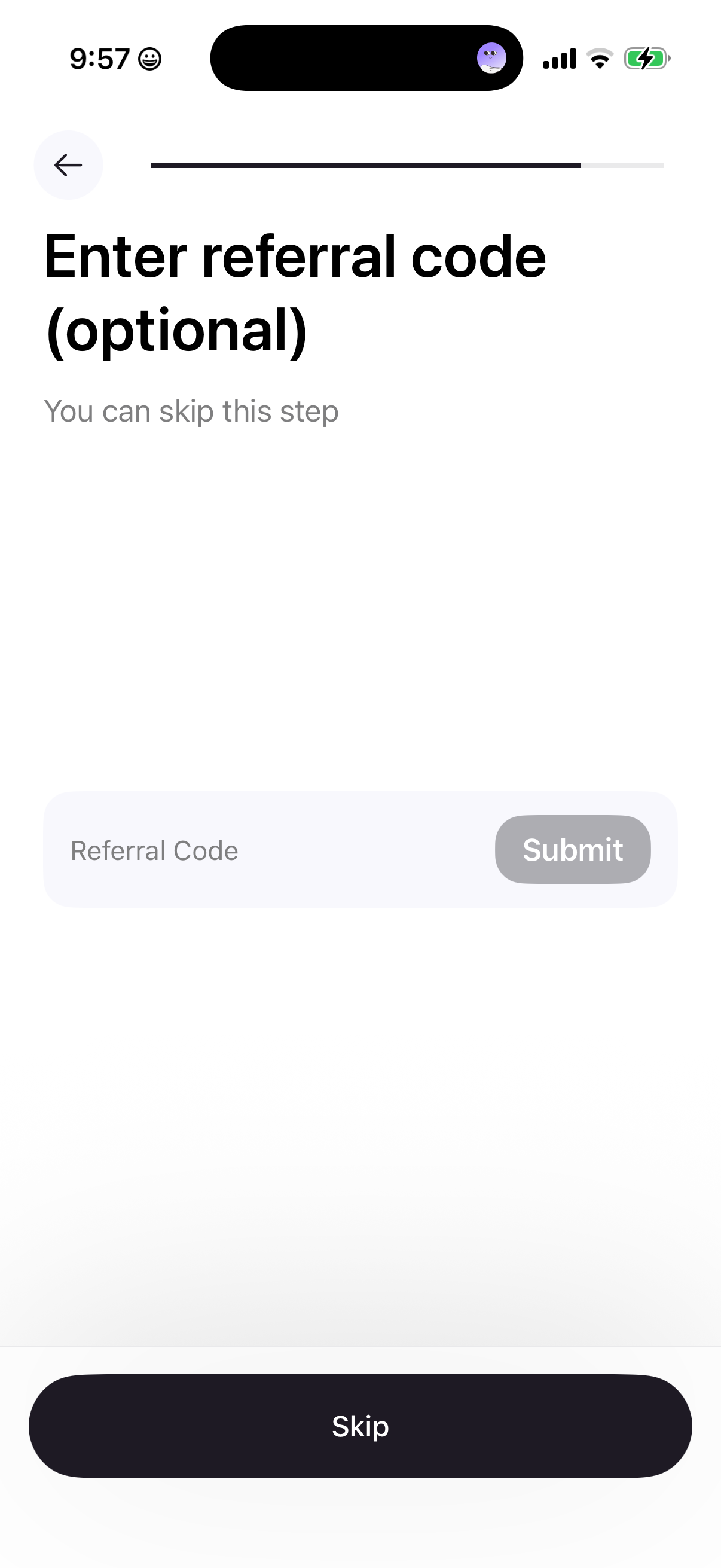
The Health-connection screen has a skip action, the referral-code step is labelled optional, and the calorie-preference screens expose yes/no choices. These are different decisions with different consequences. Use an honest skip path where an input is optional; do not make a decorative progress bar imply every prompt is mandatory. [3]
4. Put proof and promises under scrutiny
The social-proof screen displays ratings, user counts and testimonials. Those are Cal AI’s marketing claims in the capture, not independently audited facts in this article. The trial-reminder screen makes a separate operational promise. If you adopt either pattern, support the claim and verify the promised behavior. [4][5]
5. Preserve continuity into checkout
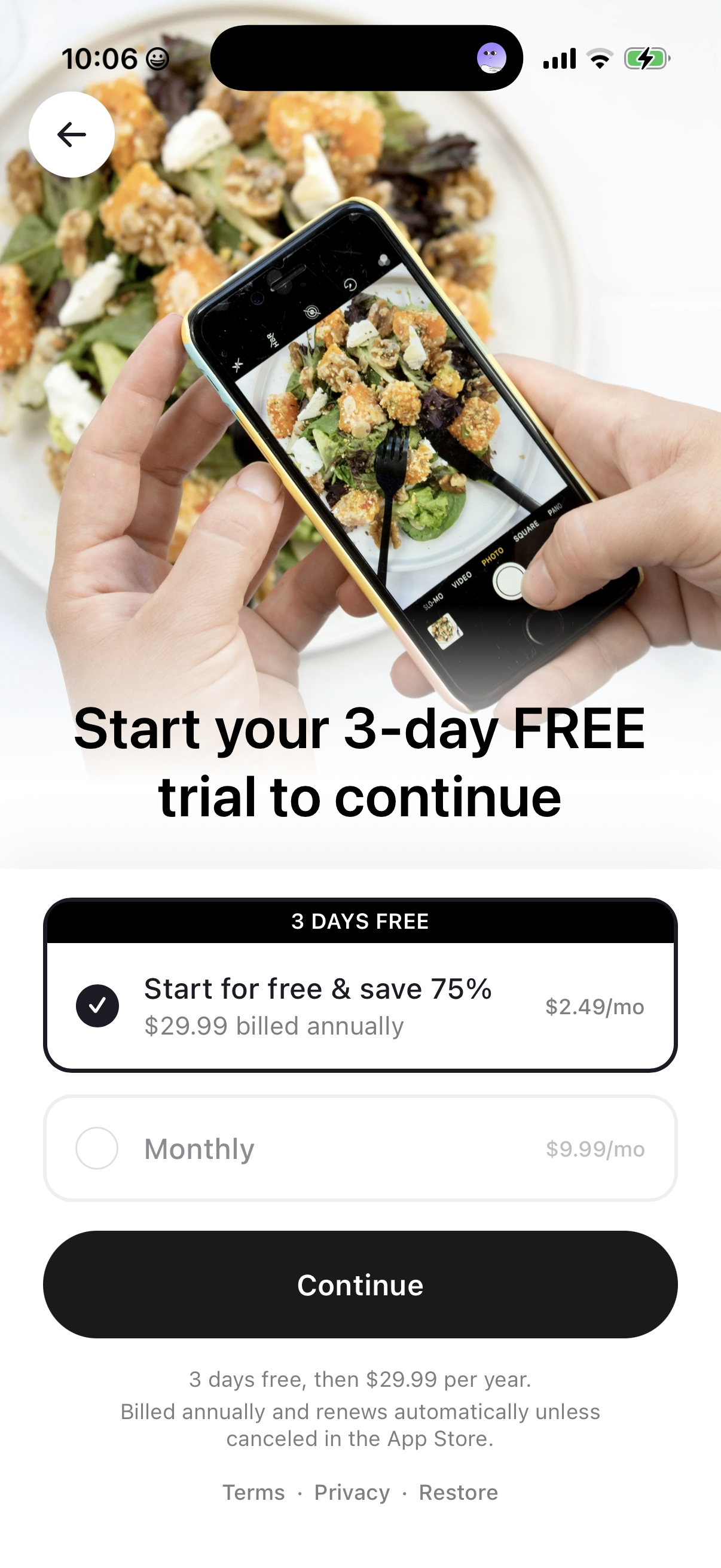
The plan selector and the App Store sheet both display the annual renewal amount in this captured path. Keep that continuity when transitioning from a persuasive page to the actual subscription decision. Evaluate comprehension, cancellation and retained paid use as well as the initial click. [6]
What not to generalize
A long intake is not automatically valuable. A selected annual plan is not automatically the right default. A before-and-after chart is not evidence of a health outcome. This archive records one app on one path; it does not contain a randomized test, a control group, or business results. Use it to form specific hypotheses rather than to declare universal best practices.
Sources & citations
- [1] Food-scanning welcome preview Open source. Pinned August 2026 screenshot, visually reviewed September 9, 2026. An observed interface, not a measured experiment result. ↩
- [2] Editable plan output Open source. Pinned August 2026 screenshot, visually reviewed September 9, 2026. An observed interface, not a measured experiment result. ↩
- [3] Optional referral-code step Open source. Pinned August 2026 screenshot, visually reviewed September 9, 2026. An observed interface, not a measured experiment result. ↩
- [4] Ratings and testimonial presentation Open source. Pinned August 2026 screenshot, visually reviewed September 9, 2026. An observed interface, not a measured experiment result. ↩
- [5] Trial-reminder promise Open source. Pinned August 2026 screenshot, visually reviewed September 9, 2026. An observed interface, not a measured experiment result. ↩
- [6] Annual plan and renewal presentation Open source. Pinned August 2026 screenshot, visually reviewed September 9, 2026. An observed interface, not a measured experiment result. ↩
Source: Lazyweb Research — proprietary analysis of real, in-market app screens. Cite as Lazyweb Research, 2026-09-09.