
Your landing page’s weakest score is Trust.
How Quotient Labs ranks
- 1.
LiteLLM81
- 2.
Requesty76
- 3.
Helicone75
- 4.
Quotient Labs70
- 5.
LangDB (AI Gateway)63
Trust
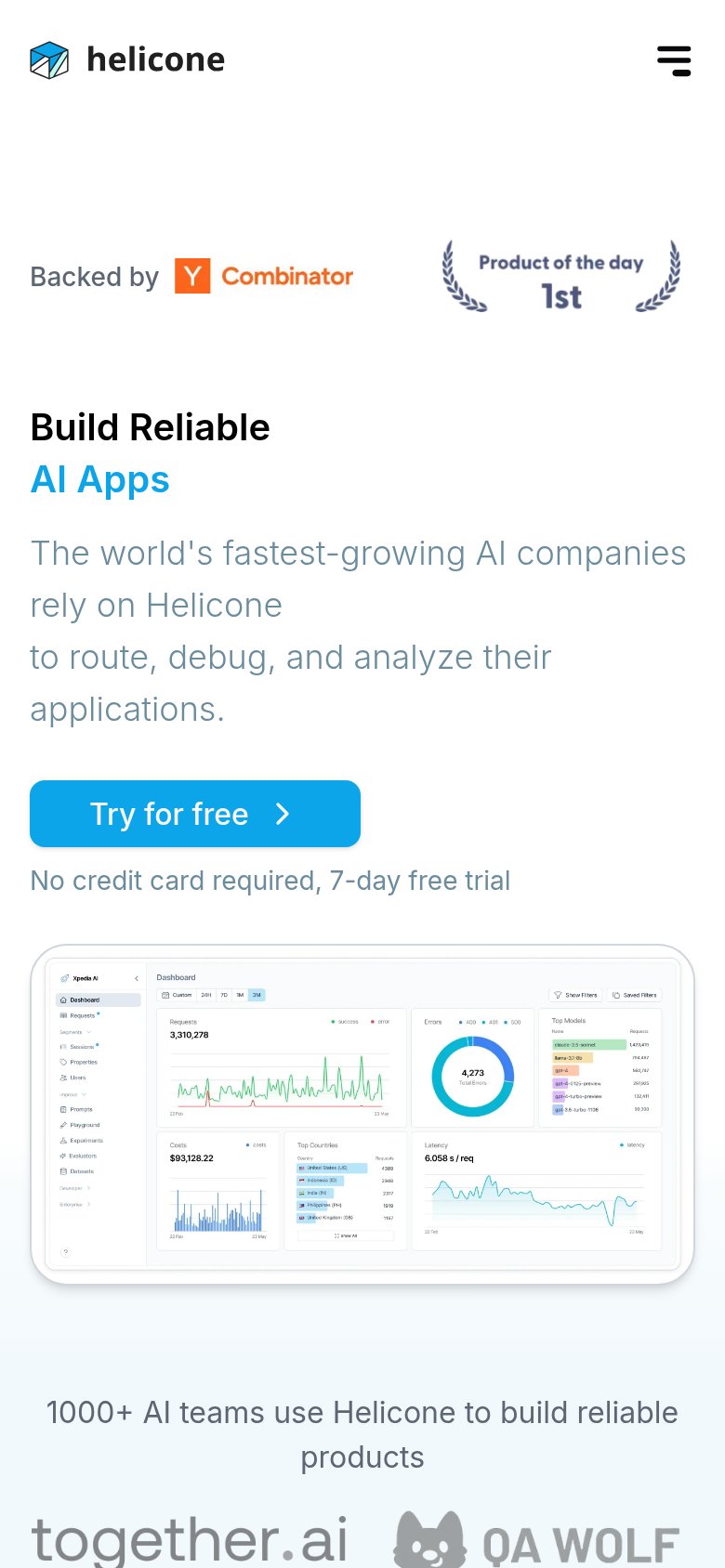
58FairProof that the product is real, competent, and safe to try.
| Trust read | |
|---|---|
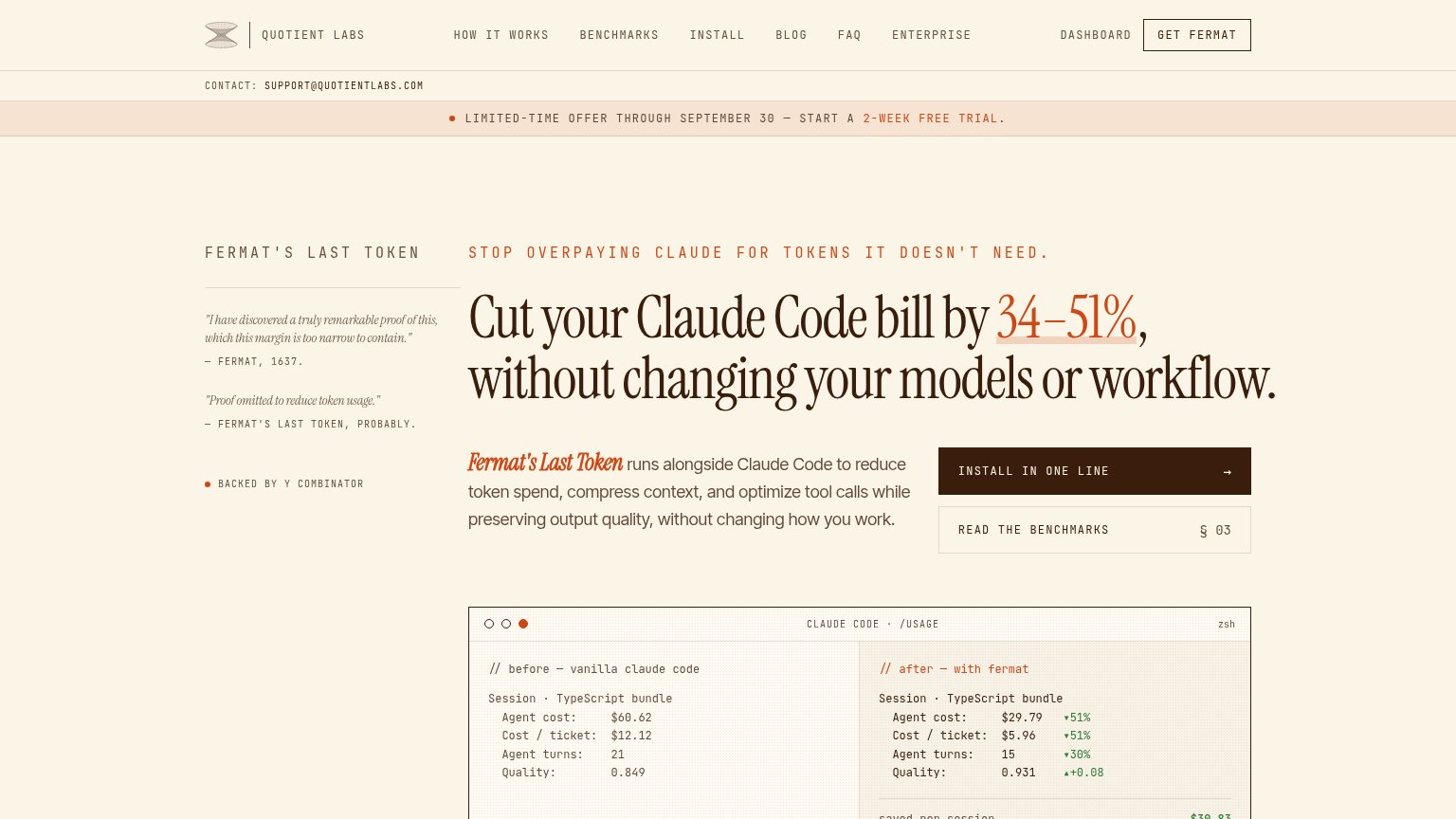
| Quotient Labs | Before/after terminal demo showing Agent cost $60.62 → $29.79 with quality 0.931 ▲+0.08 |
| No visible trust signal identified. | |
| Detailed analytics dashboard screenshot showing "Sum of Cost by Model Over Time — $445.95" with per-model usage table (o | |
| "1000+ AI teams use Helicone to build reliable products" with customer logos (together.ai, QA Wolf) | |
| implicit context LiteLLM may benefit from pre-existing familiarity among its target audience. |
Mobile web
62FairThe phone experience as a first-class citizen.
 1234
- Fermat quote block — Two decorative quotes and attributions fill the mid-fold, pushing the headline and CTA far below the first viewport.
- Contact + promo bars — Double-decker strips under the header eat vertical space before any value statement appears.
- Get Fermat button — Primary CTA wraps to two lines and stays desktop-proportioned instead of a full-width thumb target.
- Section label heading — 'FERMAT'S LAST TOKEN' letter-spaced label leads the fold instead of the actual value headline.
CTA
68FairCopy, size, verb, cost-feel — does the primary CTA earn the click?
How Quotient Labs compares
Recommended rewrites
Information hierarchy
72FairDoes the design help or inhibit what the page is trying to say?
What works
What to improve
Value props
88StrongTitle, subtitle, hero — do they sell the product's true value?
Quotient Labs’s headline
Cut your Claude Code bill by 34–51%, without changing your models or workflow.
Fermat's Last Token runs alongside Claude Code to reduce token spend, compress context, and optimize tool calls while preserving output quality, without changing how you work.
Working
Could improve