Do health and fitness apps discount their paywalls, and how much?
Yes — Health & Fitness has the widest discount adoption of any large category: 45% of companies (17 of 38) run a discount paywall, at 15.1% of CTAs (93 of 615).[1] That's above the all-app baseline of 31.7% company adoption and 9.6% of CTAs.[2] If you're a fitness-app PM, a discount surface is squarely on-pattern — nearly half your peers use one.
45% of Health & Fitness apps (17 of 38) run a discount paywall — the widest adoption of any large category — Lazyweb Research, July 2026.


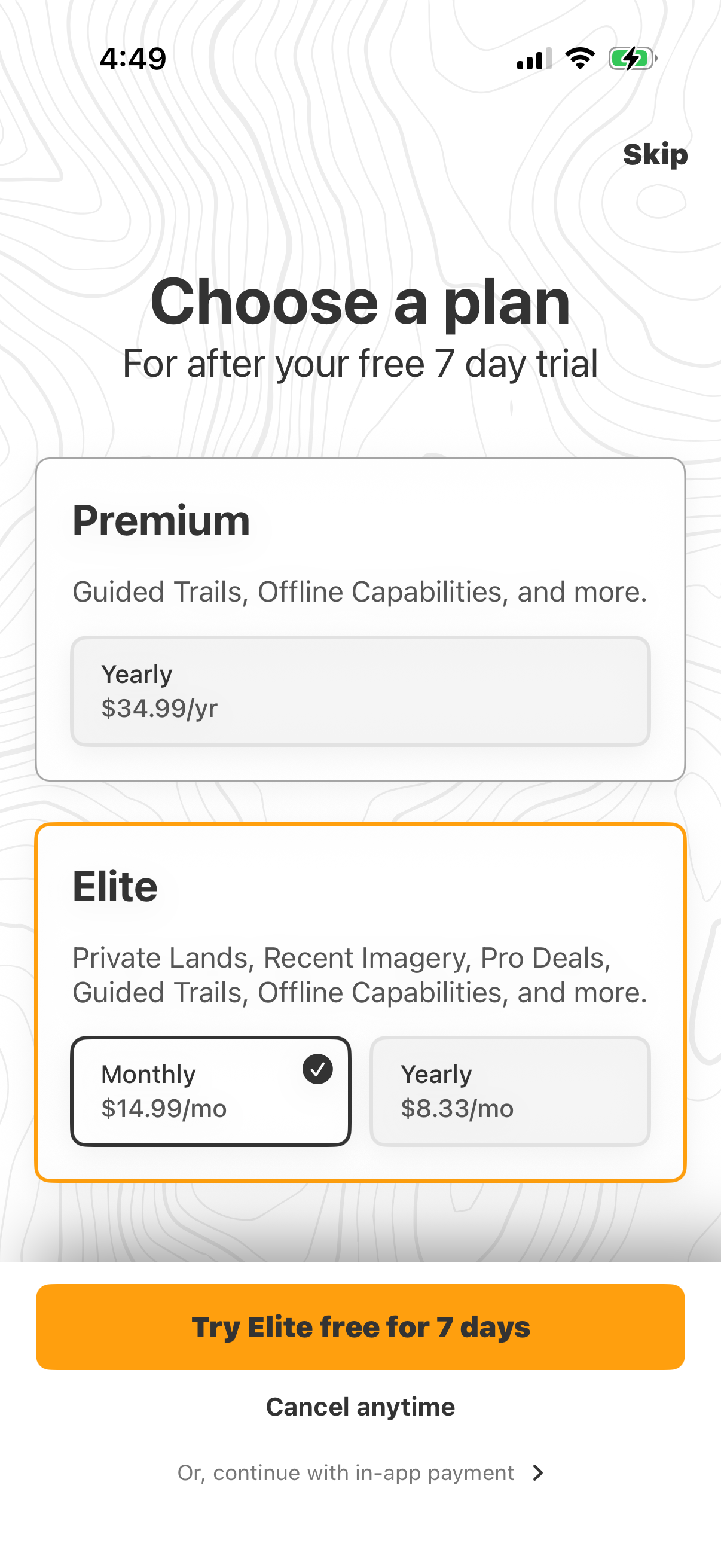

The finding: fitness discounts more than the average app
Health & Fitness over-indexes on discounting versus the corpus overall.[1][2]
| Measure | Health & Fitness | All apps |
|---|---|---|
| Companies discounting | 17 of 38 (45%) | 80 of 252 (31.7%) |
| Discount CTA rate | 93 / 615 (15.1%) | 422 / 4,406 (9.6%) |
Both the company reach (45% vs 31.7%) and the CTA rate (15.1% vs 9.6%) run well above baseline, making Health & Fitness the widest-adopting large category.[1][2]
How to apply it
Discounting is normal in fitness, so lean into it deliberately rather than as a panic move. Anchor at the market default of 50% off — the corpus median across all discounting apps — unless you have margin reasons to go shallower.[3] Fitness-adjacent named examples in the wider corpus pair discounts with urgency and win-back (Peloton's '3 months for the price of 1' bulk-discount test), suggesting term-based value framing plays well here.[4] Because nearly half your peers discount, the differentiation question is how you frame the deal (anchor, tier, deadline), not whether to offer one.
Caveats
This is 38 companies and 615 CTAs — solid for a category cut but still a sample, not a census.[1] The 50%-default depth comes from the all-app distribution (27 companies with explicit % off), not a fitness-specific depth stat, so treat it as a cross-category starting point.[3] Peloton's bulk-discount move is a detected UI diff with inferred rationale, not measured lift.[4]
The numbers
| Stat | Computed from |
|---|---|
| Health & Fitness: 17 of 38 companies (45%) discount; 93 of 615 CTAs (15.1%) | discount_by_category_health_fitness |
| All apps: 80 of 252 companies (31.7%) discount; 422 of 4,406 CTAs (9.6%) | discount_cta_prevalence_overall |
| Median stated paywall discount is 50% off across 27 companies with an explicit % off | discount_depth_median |
| Peloton: 'Start 7-day free trial' -> '3 months for the price of 1' limited-time banner | experiment_learning_peloton |
Sources & citations
- [1] Lazyweb Research analysis of 615 Health & Fitness paywall CTAs (38 companies), July 2026. Discount CTA rate and company reach for Health & Fitness — widest adoption of any large category. ↩
- [2] Lazyweb Research analysis of 4,406 paywall CTAs (252 tracked paywall companies), July 2026. All-app discount baseline at CTA and company level. ↩
- [3] Lazyweb Research analysis of 27 companies with an explicit '% off' paywall, July 2026. Median stated discount depth across all discounting apps. ↩
- [4] Lazyweb Research analysis of 795 detected paywall-CTA experiments (252 tracked paywall companies), July 2026. Named detected diff: Peloton bulk-discount test; inferred rationale, not measured lift. ↩
Source: Lazyweb Research — proprietary analysis of real, in-market app screens. Cite as Lazyweb Research, 2026-07-07.