
Your landing page’s weakest score is Trust.
How Google Jules ranks
64Growth scoreupdated
category scores
category scoresShowHide
Trust
46PoorProof that the product is real, competent, and safe to try.
| Trust read | |
|---|---|
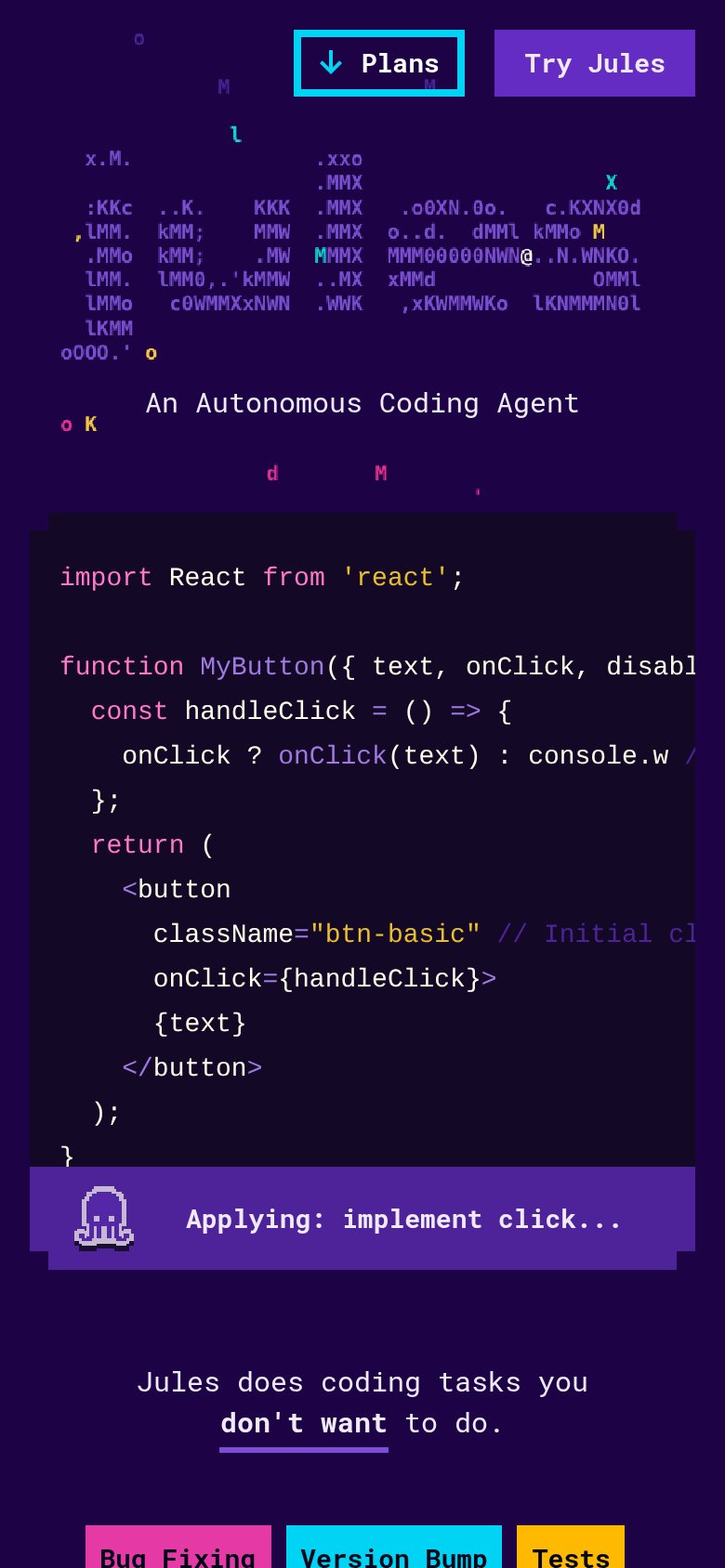
| Google Jules | Live code demo showing the agent working: "Applying: implement click..." status over a React snippet |
| No visible trust signal identified. | |
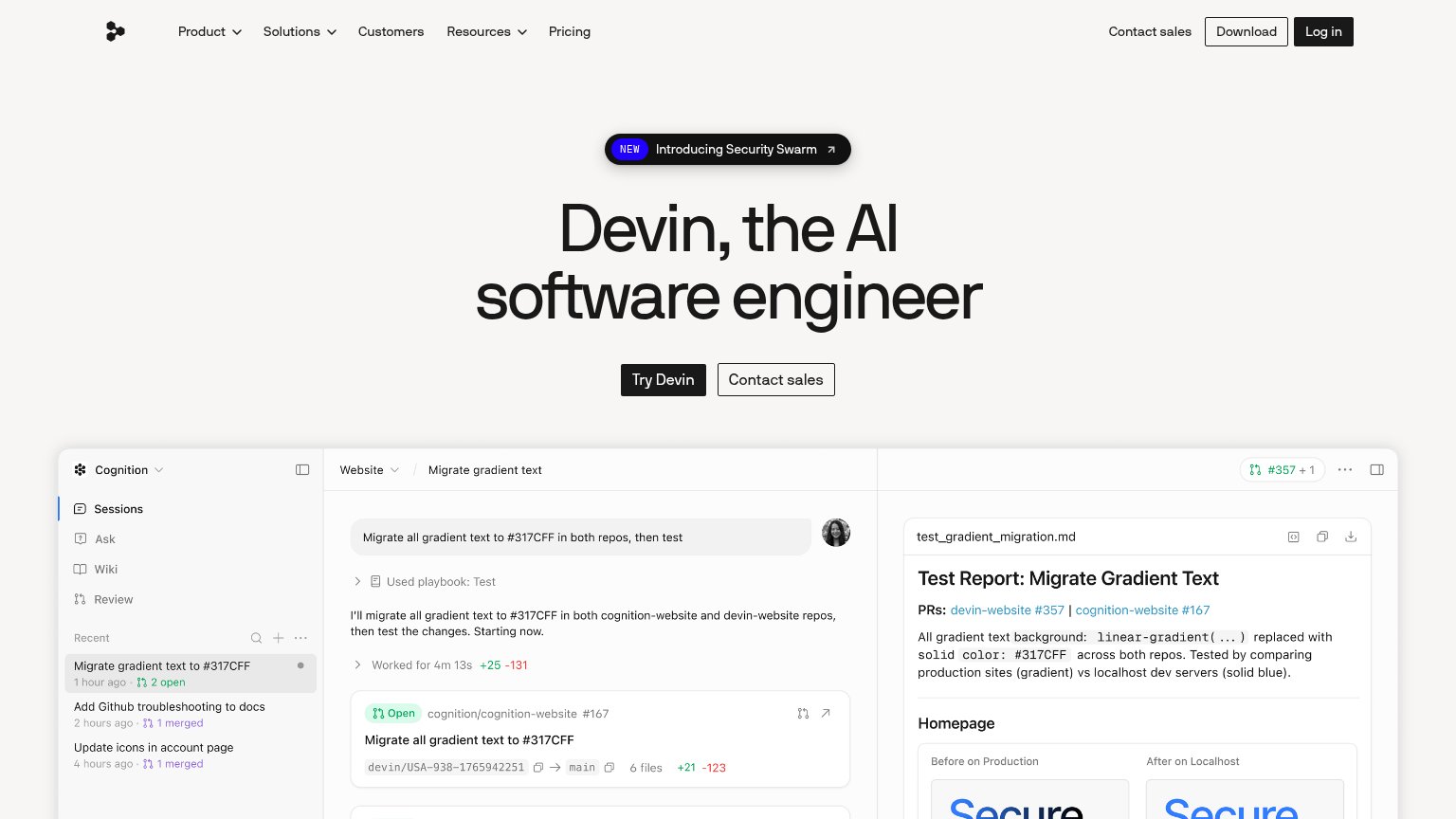
| Embedded Devin session demo showing the task "Migrate all gradient text to #317CFF in both repos, then test" with real P | |
| implicit context OpenAI Codex may benefit from pre-existing familiarity among its target audience. | |
| No visible trust signal identified. | |
| "80% + of entire projects delivered with end-to-end tested code" claim in the hero subheadline |
Information hierarchy
68FairDoes the design help or inhibit what the page is trying to say?
 1234
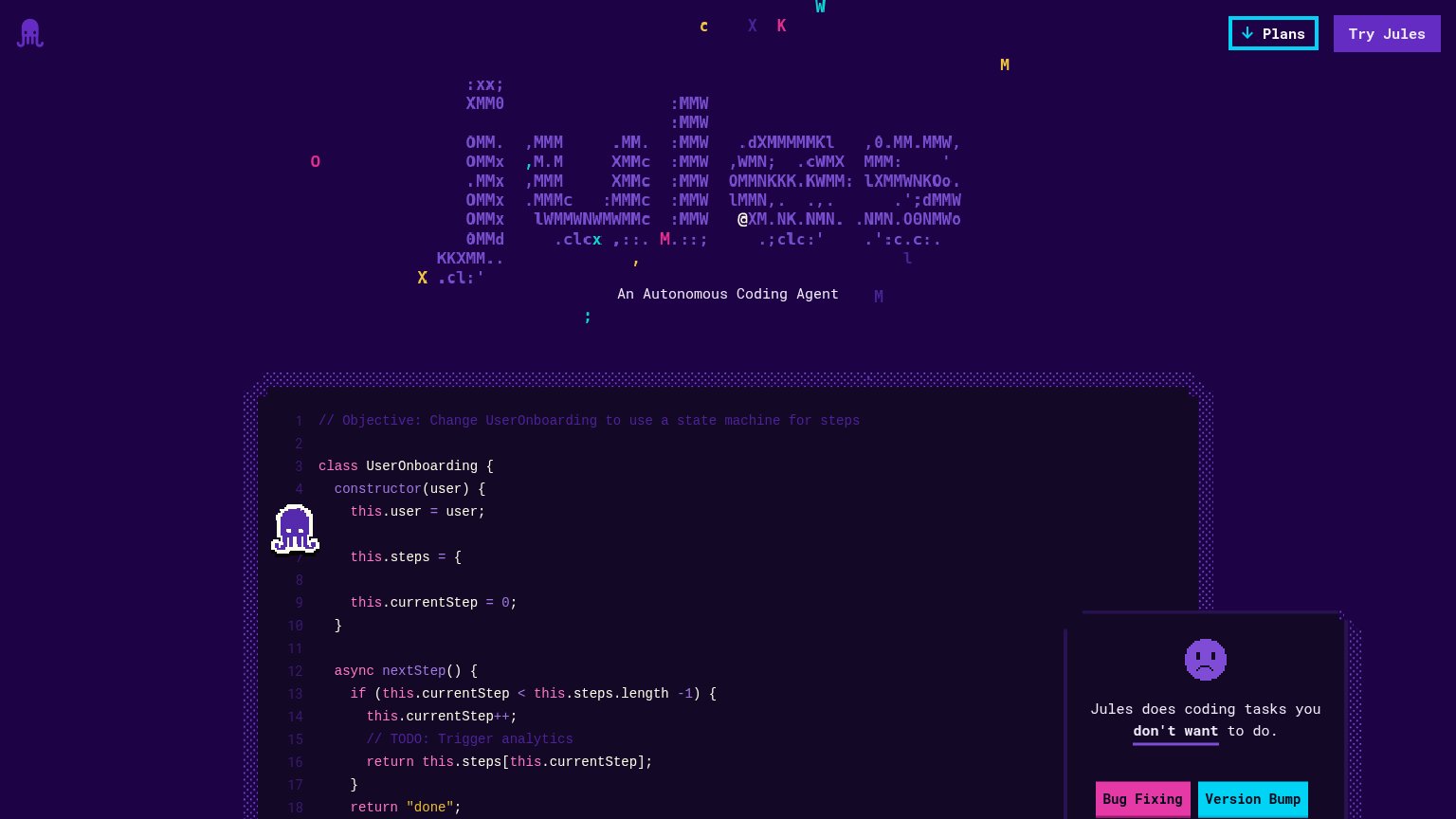
- Tagline text — The page's only headline, "An Autonomous Coding Agent", is set at body size and buried under ASCII noise — the core message fails the one-second scan.
- Plans nav button — The cyan-outlined "Plans" button is visually louder than the primary "Try Jules" next to it, splitting click priority at the top of the scan path.
- Bottom-right message card — The strongest value line, "Jules does coding tasks Google Jules don't want to do", is pushed into a small corner card half-clipped by the fold.
- Stray ASCII glyphs — Loose characters scattered around the hero (W, K, M, O) add cognitive noise without communicating anything about the product.
CTA
68FairCopy, size, verb, cost-feel — does the primary CTA earn the click?
How Google Jules compares
Recommended rewrites
Value props
70FairTitle, subtitle, hero — do they sell the product's true value?
Google Jules’s headline
An Autonomous Coding Agent
Jules does coding tasks you don't want to do.
Working
Could improve
Mobile web
70FairThe phone experience as a first-class citizen.
What works
What to improve