Do 'Limited Time Offer' Countdown Timers Get Rolled Back?
Rarely: of 58 tracked screens where an urgency element was added, 56 (97%) still had it in later captures and only 2 removed it [1]. Across 317 experiments that mention urgency or countdowns, additions outnumber removals about 9:1 (78 added vs 9 removed among classifiable diffs) [2][3]. This is a persistence signal from observed UI diffs, not a measured A/B result.
56 of 58 tracked screens that added urgency kept it (97%); urgency additions beat removals ~9:1 across 317 experiments — Lazyweb Research, July 2026.
| Item | Count |
|---|---|
| Added | 78 |
| Removed | 9 |
| Mixed | 9 |
| Unclassifiable | 221 |
The finding: urgency sticks
Lazyweb Research detected 317 before/after experiments across 97 companies that mention urgency or countdowns (countdown, limited time, urgency, timer, or expiry) [2]. Where urgency was clearly added and the screen re-captured, 56 of 58 screens kept it — a 97% persistence rate with only 2 detected removals [1]. Countdowns specifically appear in 38 experiments; the add/remove split there is too small to publish, so we report only the broader urgency direction [4].
Direction of urgency changes
| Direction | Count |
|---|---|
| Added | 78 |
| Removed | 9 |
| Mixed | 9 |
| Unclassifiable | 221 |
Among classifiable changes, urgency is added roughly 9 times for every removal [3]. That's stickier than trial changes (85% retained) but slightly below social proof (100%) and anchoring (98%) [5][6][7].
How to apply it
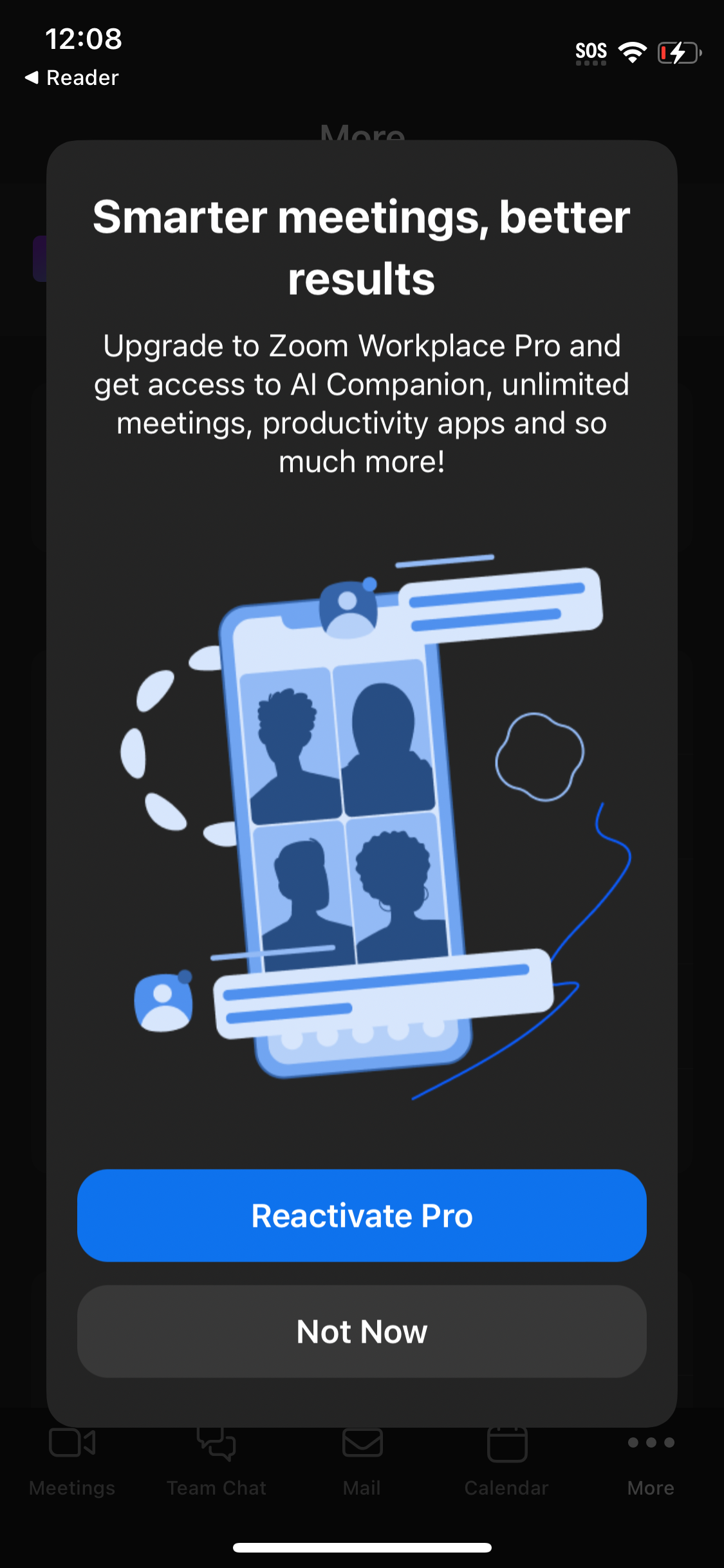
The data says urgency, once shipped, is seldom reversed — teams treat it as a keeper rather than a temporary experiment. A concrete example: kit-convertkit added a purple Black Friday bar with a live day/hour/minute/second countdown while stripping the risk-reduction trio ('14-day free trial', 'No credit card required', 'Free migrations') [8]. If you add a countdown, decide whether it's truly time-boxed or a permanent fixture, because the corpus behavior leans permanent.
Caveats
The 58-screen sample is small and 'kept it' only means no later detected removal on the same canonical screen — capture cadence varies, so absence of a removal is weaker evidence than a removal [9]. The countdown-specific add/remove split (6 added / 1 removed) is below our reporting bar, so we cite only the 38 total and the urgency-level direction [4]. Learnings are LLM-inferred, not measured lift.
The numbers
| Stat | Computed from |
|---|---|
| 56 of 58 urgency add-screens kept it (97%) | retention__urgency |
| 317 experiments mention urgency/countdown across 97 companies | tactic_mentions__urgency_countdown |
| 78 added / 9 removed / 9 mixed / 221 other (~9:1 add:remove) | direction_split__urgency |
| 38 experiments mention 'countdown' specifically; add/remove split below reporting bar | countdown_specific_mentions |
| 69 of 81 trial add-screens kept it (85%) | retention__trial |
| 29 of 29 social-proof add-screens kept it (100%) | retention__social_proof |
| 42 of 43 anchoring add-screens kept it (98%) | retention__price_anchoring |
| kit-convertkit added a Black Friday countdown bar; removed the trust-signal trio | qualitative: kit-convertkit, 2026-07-04 |
| retention is a persistence proxy, not a measured A/B result | smallSampleWarnings |
Sources & citations
- [1] Lazyweb Research analysis of 317 detected experiments (97 companies, 1,358 canonical screens), July 2026. Retention computed per canonical screen; a later detected removal counts as a reversal. ↩
- [2] Lazyweb Research analysis of 4,814 detected experiments (362 companies, 1,358 canonical screens), July 2026. Detected before/after UI diffs; learnings are LLM-inferred, not measured A/B outcomes. ↩
Source: Lazyweb Research — proprietary analysis of real, in-market app screens. Cite as Lazyweb Research, 2026-07-07.
Explore the evidence
Related questions
More in Does X work? Tactic-level experiment evidence pages →