How does ChatGPT separate current and legacy models in its model picker?
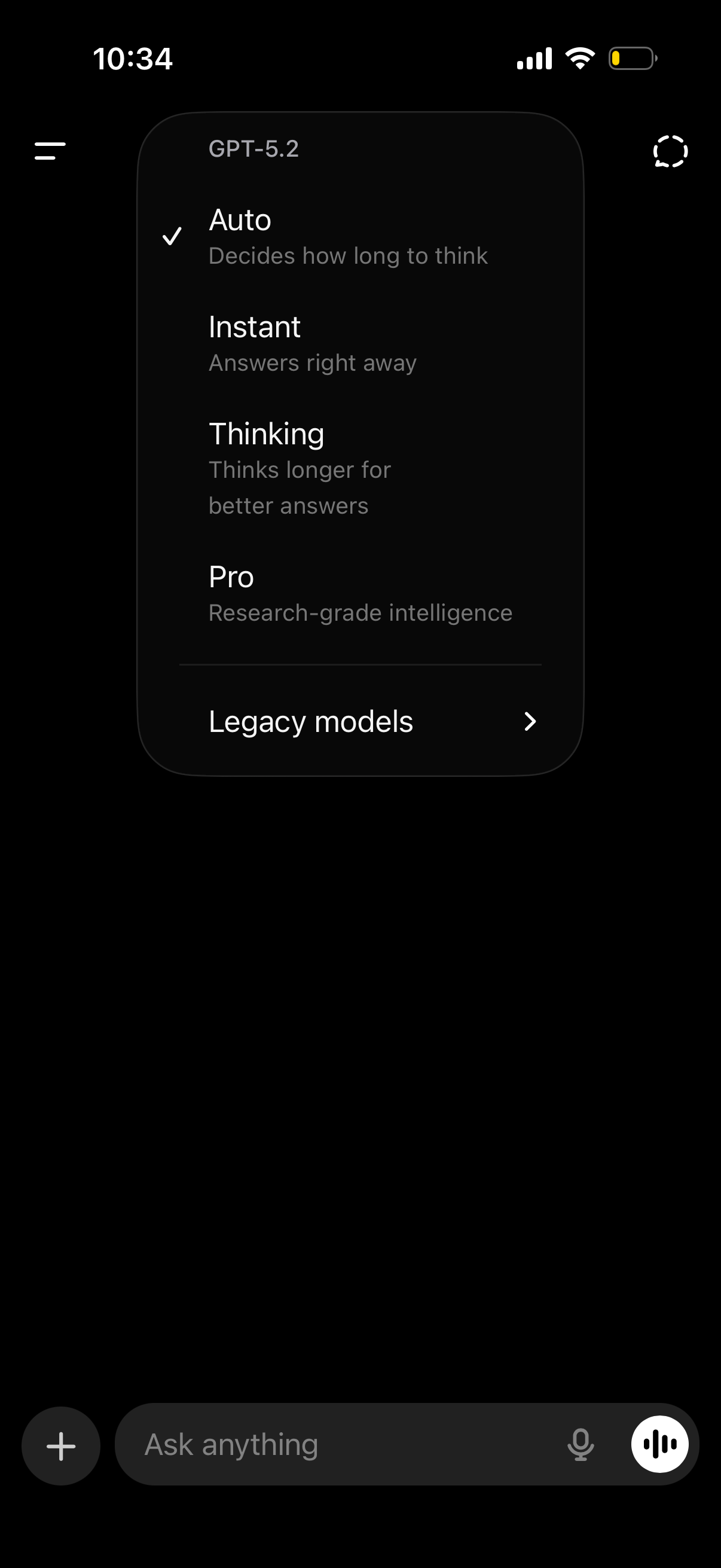
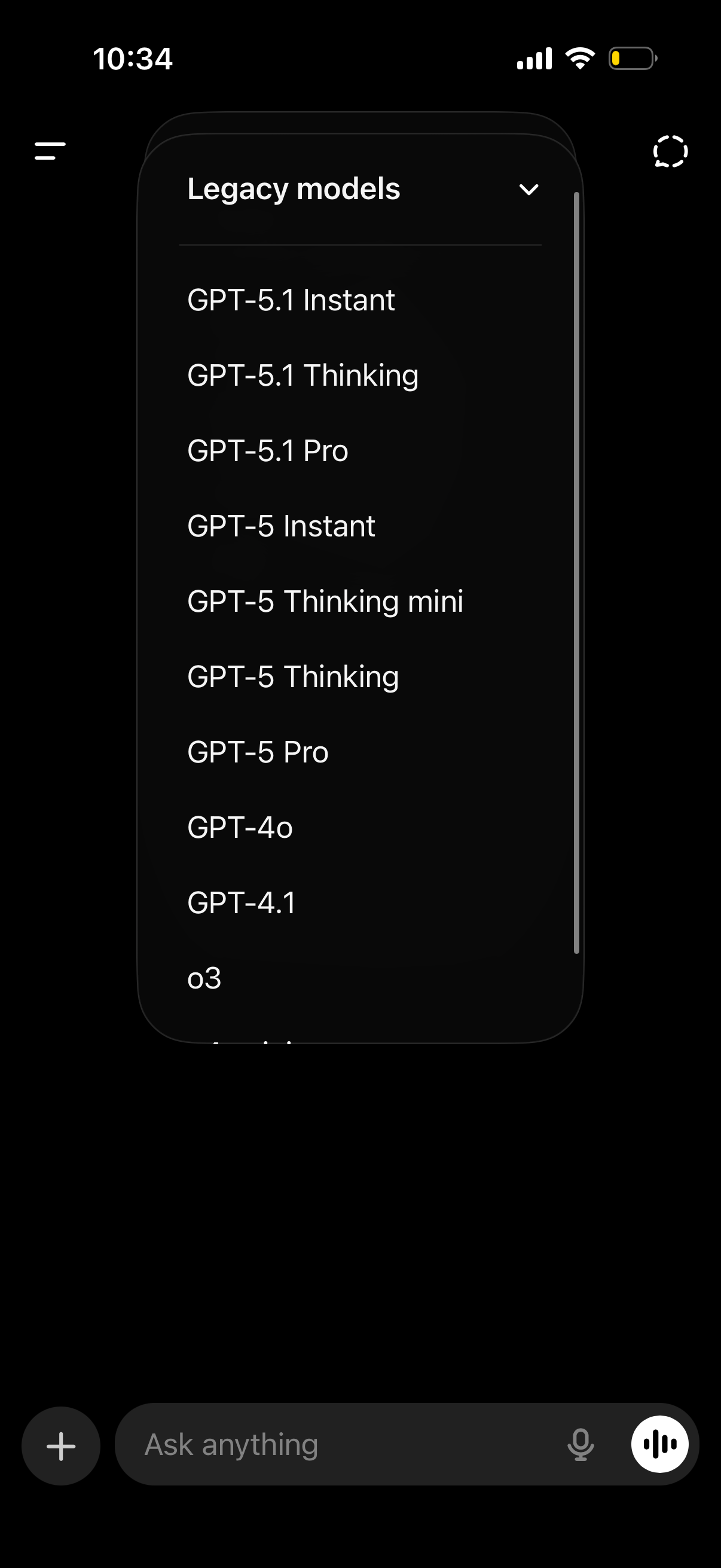
In Lazyweb’s January 2026 capture, the first menu presents four GPT-5.2 choices with short descriptions. A separate Legacy models row opens a longer, scrollable list. The pattern keeps the primary decision compact while retaining access to older options. This is a historical UI example, not a list of models available today. [1]
What the two screenshots show
The first screen groups Auto, Instant, Thinking and Pro beneath the GPT-5.2 heading. Auto carries a checkmark. Each option pairs a short name with an explanation of its intended behavior. A divider separates Legacy models from these primary choices. [1]
The second screenshot shows the expanded legacy list, including several model generations and a visible scrollbar. The conversation composer remains visible behind the menu. These are two captured menu states, not a complete recording of selection and response behavior. [1]
The design decision
There are two different jobs: choose a behavior for the next response, or deliberately return to an older model. The captured hierarchy gives those jobs separate levels. Our interpretation is that this can reduce the number of equally prominent choices; the screenshots do not measure whether people choose faster. [1]
When to use the pattern
Consider a short primary list when a product has a few common modes and many specialist or older options. Give each primary choice a meaningful description, expose selection state, and label the secondary collection clearly. Do not copy a historical model roster into a current product. This is design guidance, not an observed experiment result.
Sources & citations
- [1] ChatGPT model-picker capture Open source. Two public screenshots; page metadata updated January 2026. Visually inspected September 9, 2026. ↩
Source: Lazyweb Research — proprietary analysis of real, in-market app screens. Cite as Lazyweb Research, 2026-09-09.