What Are Companies A/B Testing on the Offer (Discounts and Trials)?
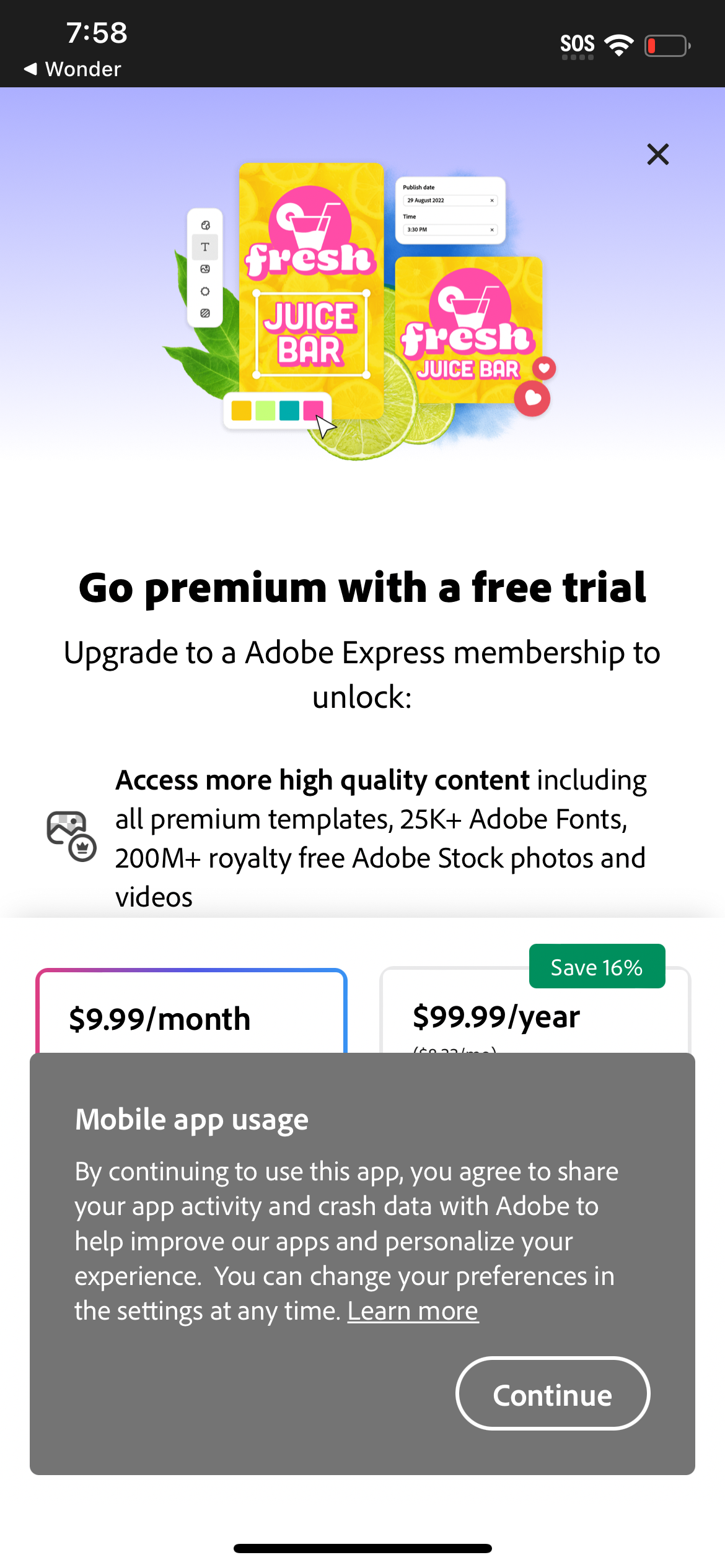
Offer — discounts, trials, and deal framing — is the highest-impact high-volume area Lazyweb Research tracks: 301 of 2,160 annotations (14.3%) with an average model impact of 3.69/5, the top score among areas with n≥100. Two-thirds (66.4%) of offer tests are scored 4+/5. It is overwhelmingly a mobile paywall surface — 255 of 301 annotations (85%) are mobile. Observed moves cluster on deepening discounts and making free trials explicit. [1]
Offer is the highest-impact high-volume test area at 3.69/5 average impact, with 66.4% of tests scored 4+/5 across 301 annotations — Lazyweb Research, July 2026.


| Item | Value |
|---|---|
| Annotations | 301 (14.3% of 2,160) |
| Distinct experiments | 281 |
| Mobile / web split | 255 / 46 |
| Avg impact (1–5) | 3.69 (highest of n≥100 areas) |
| Share scored 4+/5 | 66.4% (200/301) |
How much, and where
Offer testing at a glance: [2]
| Metric | Value |
|---|---|
| Annotations | 301 (14.3% of 2,160) |
| Distinct experiments | 281 |
| Mobile / web split | 255 / 46 |
| Avg impact (1–5) | 3.69 (highest of n≥100 areas) |
| Share scored 4+/5 | 66.4% (200/301) |
At 85% mobile, offer is a paywall-native area — teams iterate on the deal far more on in-app subscription screens than on web. [3]
Observed patterns
From offer experiments Lazyweb Research scored impact 5: [4]
- Deepen the discount, hold the framing. Blinkist strengthened its paywall from 50% OFF ($49.99/yr) to 75% OFF ($24.99/yr) while keeping identical 'ONLY TODAY' urgency and CTA — a clean read on discount depth.
- Make the trial explicit. Audible introduced a free trial: a '1 MONTH FREE' badge, price reframed as '$15.99/mo after trial,' and a CTA changed to 'Sign up for Premium Plus trial' (the control literally said 'There is no trial period').
The recurring bet: reframe the same product as a lower-risk or better-value first step, either by cutting the effective price or by leading with 'free.' [4]
How to apply it and caveats
If you run a subscription paywall, the field says the deal itself is your highest-leverage test surface. The cleanest experiments change one variable — discount depth or trial presence — and hold urgency/CTA constant, so you can attribute the result. Caveat: impact is a model-assigned 1–5 score on observed diffs, a relative ranking, not measured lift. [5] Deeper discounts trade ARPU for conversion, so they fit products whose LTV can absorb the hit — the Blinkist example is an observation, not a recommendation.
The numbers
| Stat | Computed from |
|---|---|
| Offer 301 annotations (14.3%), avg impact 3.69, 255 mobile / 46 web, 66.4% scored 4+ | statpack area_OFFER + high_impact_share_by_area |
| Offer: 301 annotations, 281 experiments, avg impact 3.69, 66.4% scored 4+ (200/301) | statpack area_OFFER + high_impact_share_by_area |
| Offer is 85% mobile (255/301) | statpack area_OFFER + platform_area_split |
| Offer impact-5 examples: Blinkist (50%→75% off), Audible (added free trial) | statpack qualitative OFFER entries |
| Impact is a model-assigned 1–5 score on observed diffs, not measured lift | statpack methodology note |
Sources & citations
- [1] Lazyweb Research analysis of 301 offer annotations (281 experiments) within 2,160 total, July 2026. OFFER: highest avg impact (3.69) among n≥100 areas; 255 mobile / 46 web. ↩
- [2] Lazyweb Research analysis of 301 offer annotations, July 2026. 200 of 301 scored 4+/5. ↩
- [3] Lazyweb Research analysis of 2,160 area annotations, July 2026. Offer is 85% mobile — a paywall-native surface. ↩
- [4] Lazyweb Research qualitative review of top-impact offer experiments, July 2026. Blinkist and Audible — single observations scored impact 5 by the model. ↩
- [5] Lazyweb Research methodology note, July 2026. Impact is a relative model score on before/after diffs, not measured lift. ↩
Source: Lazyweb Research — proprietary analysis of real, in-market app screens. Cite as Lazyweb Research, 2026-07-07.