How do apps disclose the price after a free trial on the paywall?
The dominant pattern is a 'trial-then-price' line placed above a soft CTA button, not price in the button. Among the 258 primary CTAs that name a trial length, the recurring format is '[N] days free, then $X/period' — e.g. PictureThis's 'Try 7 days free, then $39.99/year' with a 'Continue' button [1][2]. Only 11.6% of primary CTAs put any price in the button itself [3].
258 of 1,886 primary CTAs name a trial length; the norm is a 'N days free, then $X' line above a soft button — July 2026.
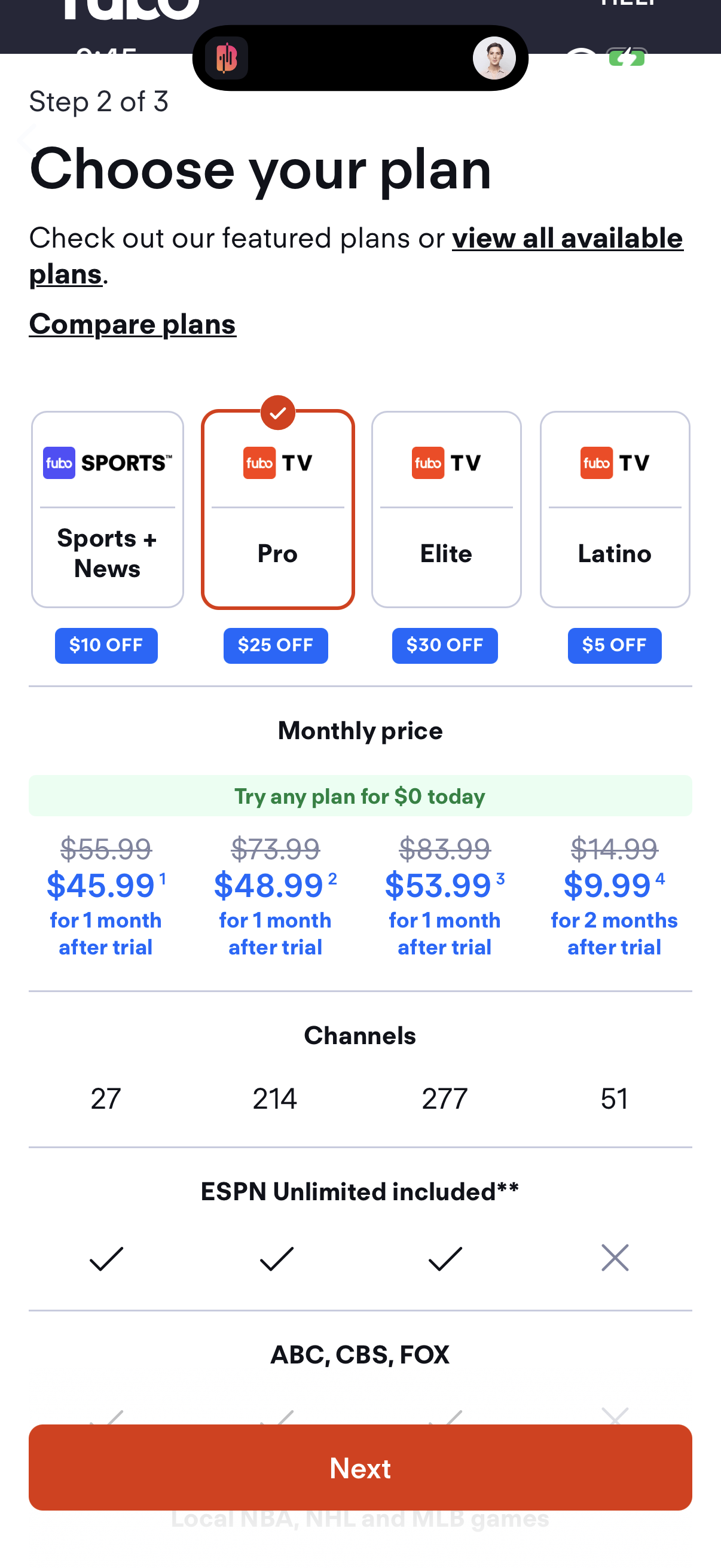
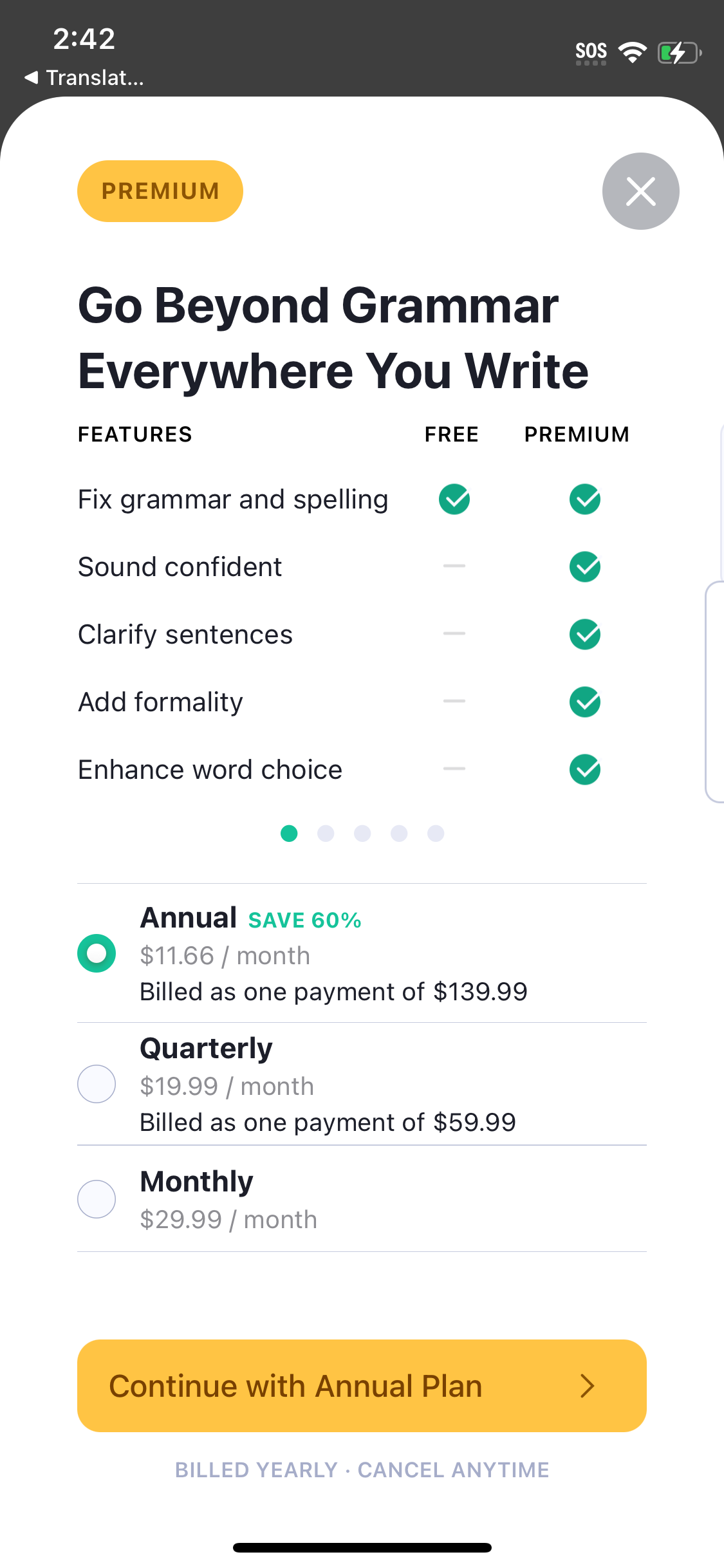
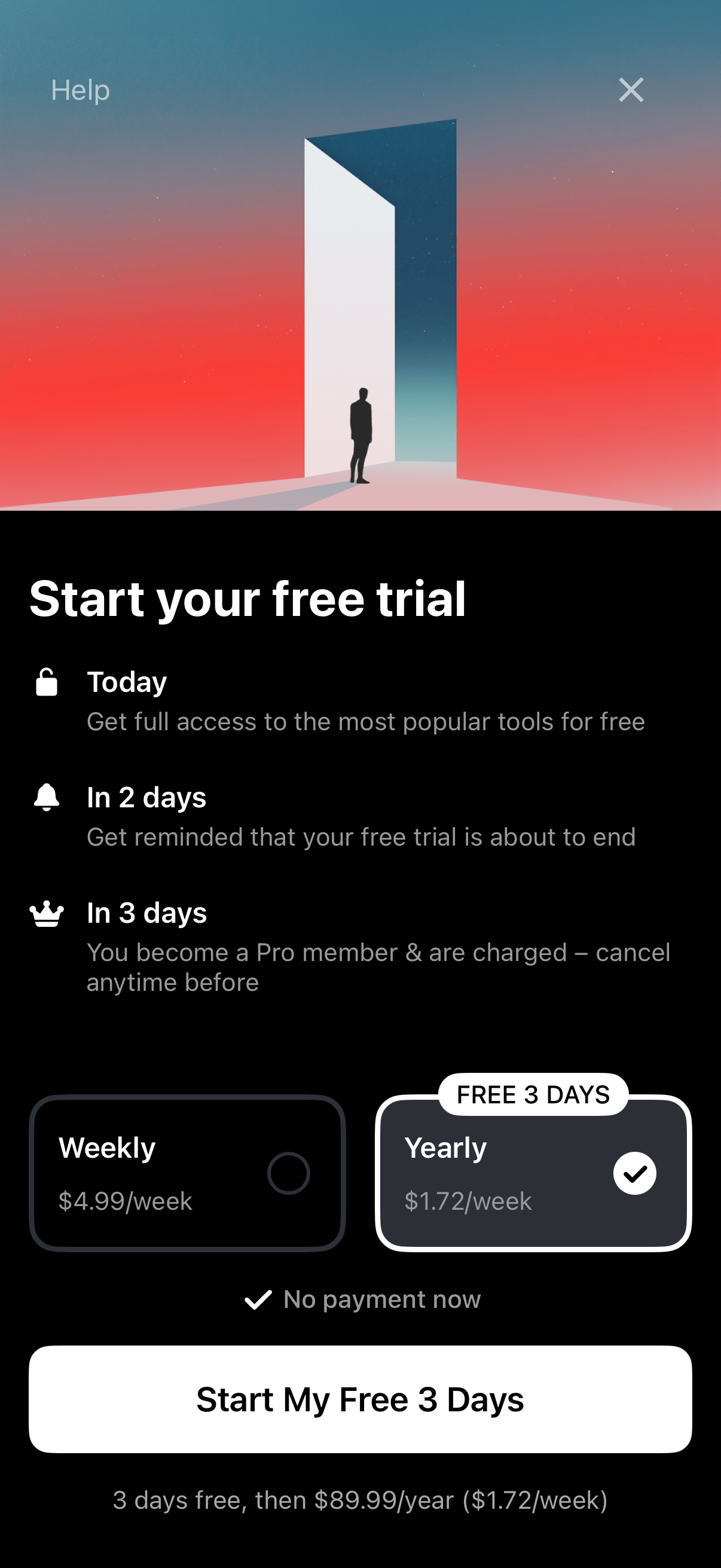
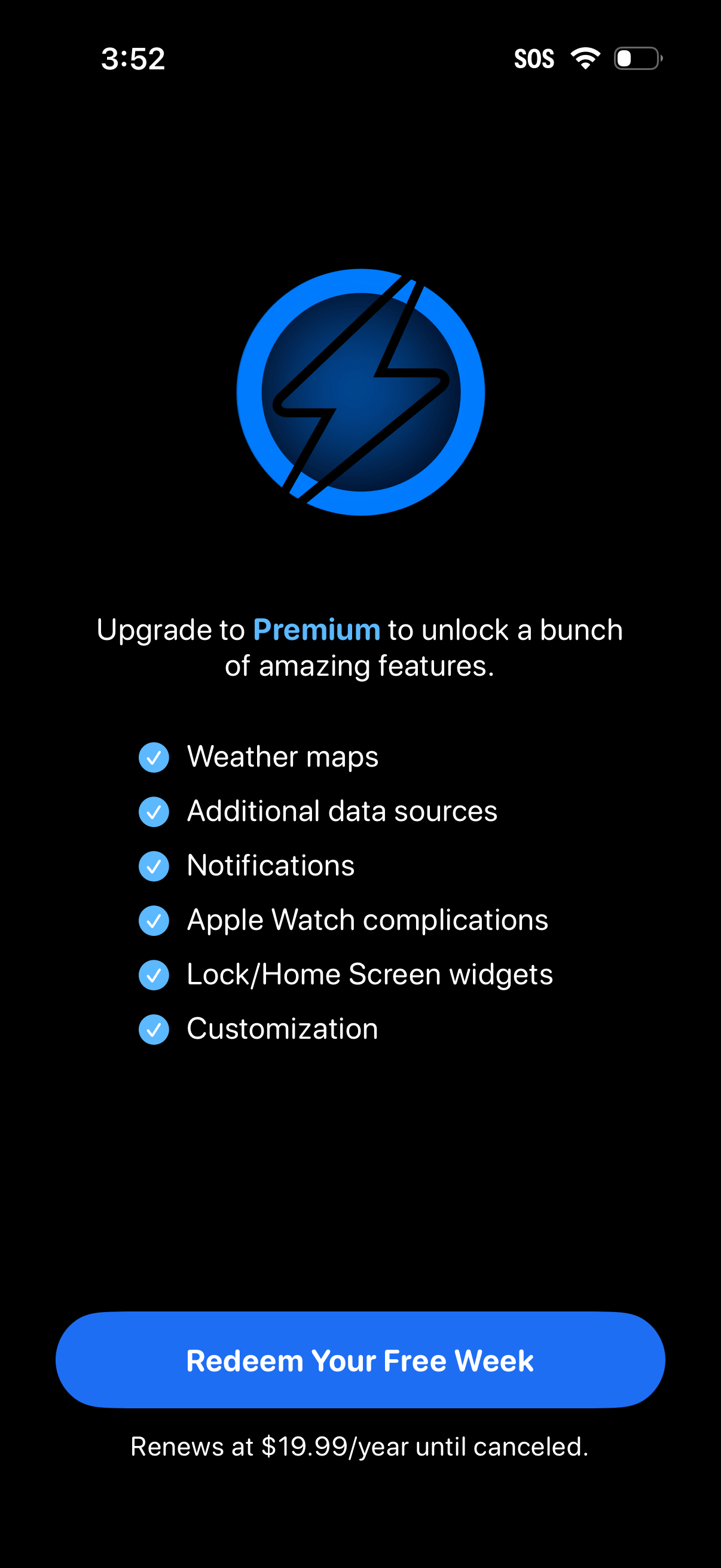
The finding: disclosure lives above the button
Trial length appears in 258 of 1,886 primary CTAs (13.7%), and it shows up in the copy adjacent to the button far more than in the button text [1]. The button itself is usually a soft verb — 'Continue' (21.2%) and 'Start' (16.9%) are the two most common — while the trial-then-price disclosure sits in the surrounding title/subtitle [4]. Only 11.6% of CTAs embed a price in the button [3]. So the standard anatomy is: *offer line above (trial + price) → soft CTA below.*
The recurring disclosure formats
From the corpus, the trial-then-price line takes a few consistent shapes:
- Length + then-price: PictureThis — "Try 7 days free, then $39.99/year" [2]
- Trial + then-price + weekly: Smart Cleaner — "3-day trial, then $5.99/week" [5]
- Trial + auto-renew note: TV Remote — "3-DAY FREE, auto-renew. Then $3.99" [5]
- Trial + then-price + reassurance stacked: Scribd — "Free for 30 days, then $11.99/month. Cancel anytime." [6]
The strongest versions add an explicit no-charge clause tied to the window — PictureThis's "No charge if canceled before your 7-day free trial" [7].
How to apply this
Use the standard anatomy: put the full disclosure — "[N] days free, then $X/[period]" — in the line directly above a soft CTA ('Continue' / 'Start'), which matches both the dominant verbs and the majority price-placement pattern [3][4]. Add an auto-renew note (TV Remote) and, where card-charge fear is likely, an explicit "no charge until [date]" clause (PictureThis) [5][7]. Stack 'cancel anytime' onto the end if lock-in is the concern, as Scribd does [6]. This format is both the on-norm pattern and the clearest for renewal-term transparency.
Caveats
Length and price are detected from CTA text plus adjacent extracted copy only, so disclosures placed far from the button (e.g. footer fine print) aren't captured [8]. The 258-CTA length base and 11.6% price-in-button figure use the 1,886 primary-role CTAs; 39% unknown-role rows are excluded [9]. Examples are illustrative of format, not measured conversion outcomes.
The numbers
| Stat | Computed from |
|---|---|
| 258 of 1,886 primary CTAs name a trial length (13.7%) | trial_length_any_day_share: 258/1886 = 13.7% |
| PictureThis 'Try 7 days free, then $39.99/year' + 'Continue' | qualitative picturethis 7-day entry |
| Price in button: 11.6% of primary CTAs | price_in_cta_share: 11.6% |
| Continue 21.2%, Start 16.9% lead CTA verbs | cta_verb_families |
| Smart Cleaner, TV Remote trial-then-price examples | qualitative 3-day entries (smart-cleaner, tv-remote) |
| Scribd 'Free for 30 days, then $11.99/month. Cancel anytime.' | qualitative scribd cancel anytime entry |
| PictureThis 'No charge if canceled before 7-day free trial' | qualitative picturethis no-payment entry |
| Detection reads CTA + adjacent copy only | universe note |
| 39% CTA rows role='unknown', excluded | universe note |
Sources & citations
- [1] Lazyweb Research analysis of 1,886 primary paywall CTAs (~800 tracked apps), July 2026. 258 length-naming CTAs; verb families and price-in-button from the same primary set. ↩
- [2] Lazyweb Research analysis of paywall CTA copy examples (~800 tracked apps), July 2026. Named on-screen disclosure formats from PictureThis, Smart Cleaner, TV Remote, Scribd. ↩
Source: Lazyweb Research — proprietary analysis of real, in-market app screens. Cite as Lazyweb Research, 2026-07-07.
Explore the evidence
Related questions
More in Free-trial framing and reassurance copy on paywalls →