3-day vs 7-day vs 14-day: which free-trial length do most apps advertise?
Among the 63 companies that advertise any trial length on their paywall, 7 days is the clear default: 42 companies (67%) name it, versus 12 for 14-day and 9 for 3-day [1][2][3]. At the CTA level, 7-day mentions (148) outnumber 3-day (54) and 14-day (31) combined [4][5][6]. If you want the modal choice, it is 7 days.
42 of 63 length-advertising companies (67%) name a 7-day trial — vs 12 for 14-day, 9 for 3-day — July 2026.

| Item | Share of length-mentioning CTAs |
|---|---|
| 7-day / 1-week | 57.4% [4] |
| 3-day | 20.9% [5] |
| 14-day / 2-week | ~12% [6] |
| 30-day (upper bound) | — [7] |
The finding: 7-day is the default, by a wide margin
Only 63 of 222 companies with primary paywall CTAs advertise a specific trial length at all [2]. Among those that do, the split is lopsided:
| Length | Companies naming it | CTA mentions | Share of length-mentioning CTAs |
|---|---|---|---|
| 7-day / 1-week | 42 | 148 | 57.4% [4] |
| 3-day | 9 | 54 | 20.9% [5] |
| 14-day / 2-week | 12 | 31 | ~12% [6] |
| 30-day (upper bound) | 7 | 65 | — [7] |
7-day accounts for 57.4% of all length-naming primary CTAs — a majority on its own [4]. (Percentages sum past the length-mention base because 30-day is inflated by money-back copy; see caveats.)
How to read the three options
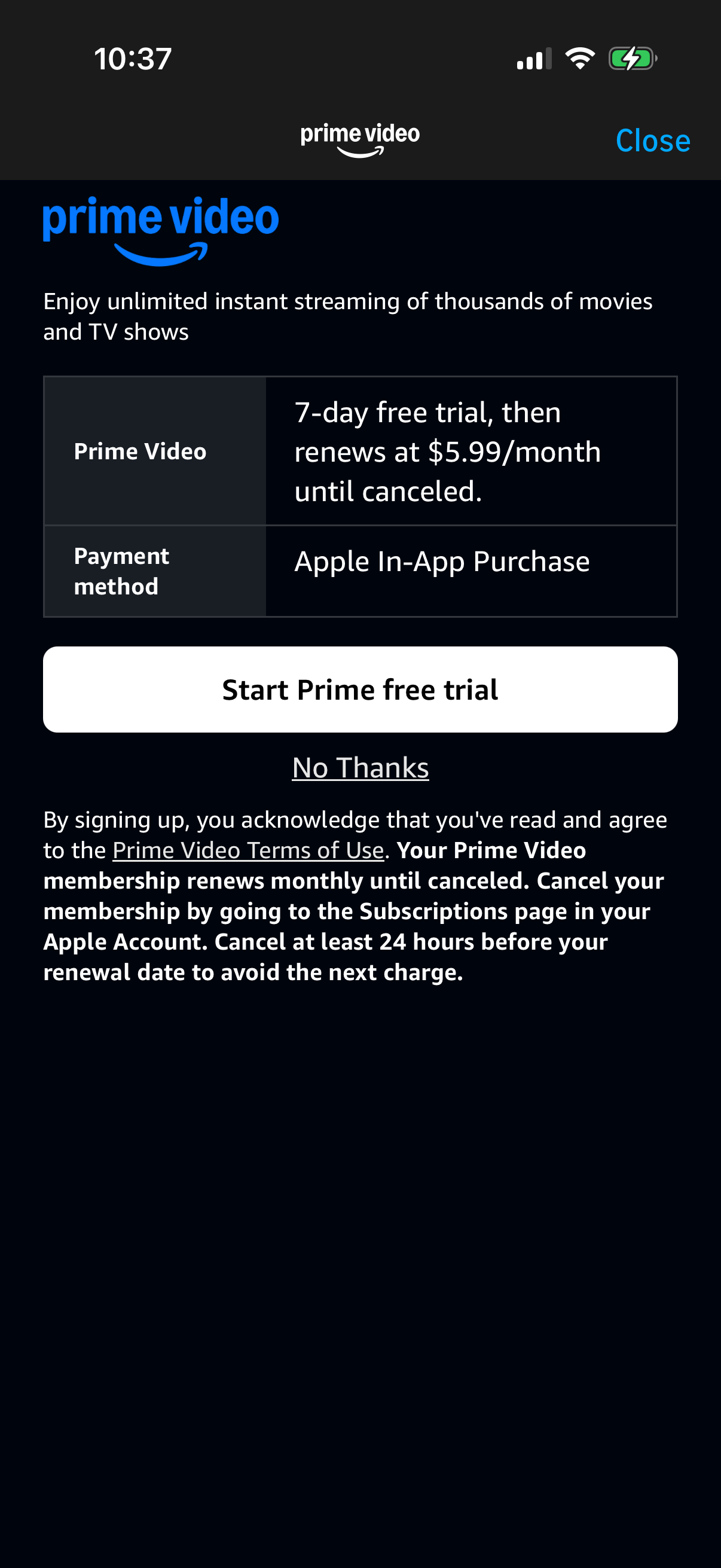
7-day is the safe, expected choice — a full week to reach an aha moment while keeping the billing clock short. Examples: Yousician ("Try free for 7 days"), PictureThis ("Try 7 days free, then $39.99/year") [8].
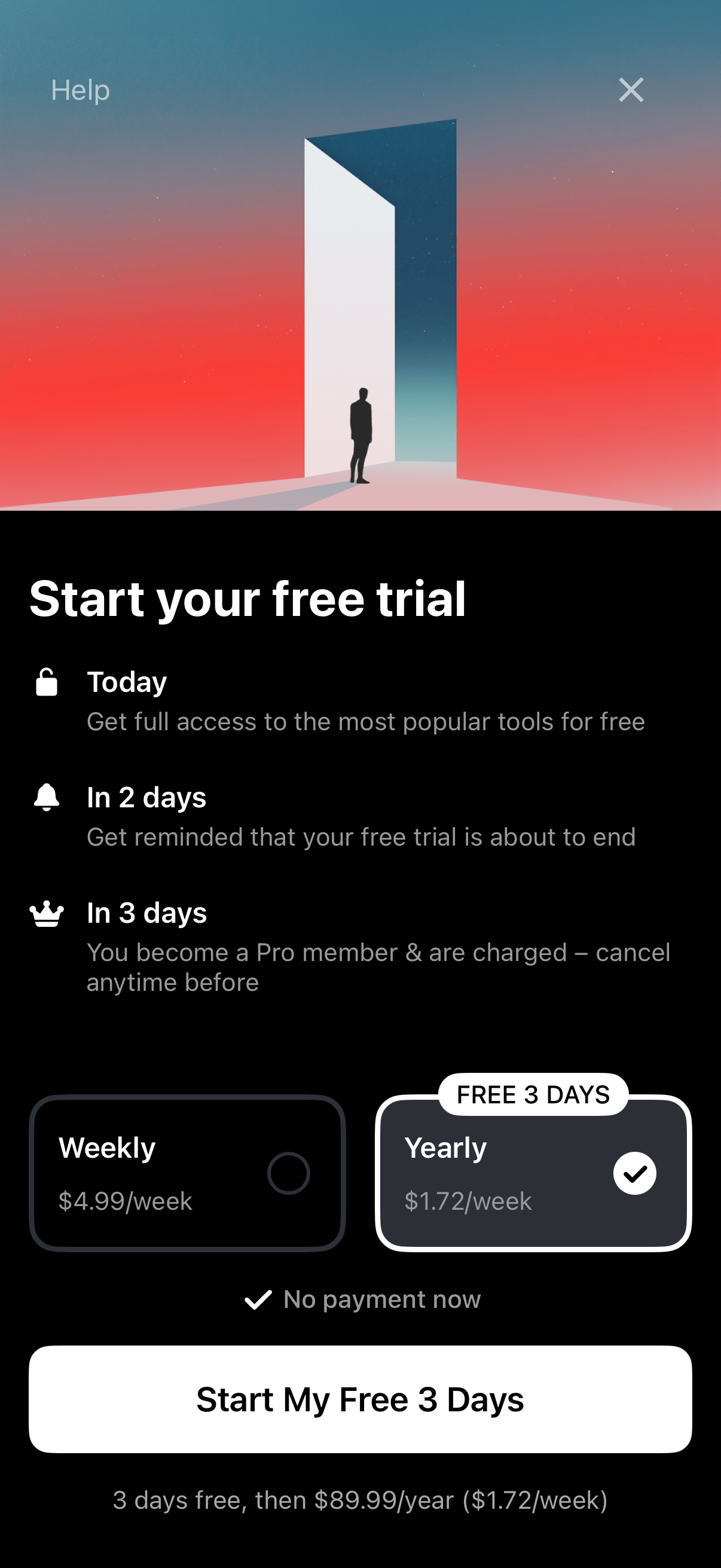
3-day is the aggressive, conversion-forward play — get to the charge faster. It is concentrated in only 9 companies and heavily driven by one app's copy, so it reads as a deliberate tactic, not a norm [3]. Examples: Smart Cleaner ("3-day trial, then $5.99/week"), TV Remote ("3-DAY FREE, auto-renew") [9].
14-day is the evaluation-heavy choice, favored by creative/productivity tools like Canva and Zoom where value takes longer to prove [10].
How to apply this
Default to 7 days unless you have a specific reason not to. It is what two-thirds of length-advertising companies land on, so it will feel native to users and unremarkable to reviewers [1]. Go to 3 days only if your activation is genuinely fast and you are optimizing trial-to-paid velocity — accept that it signals urgency. Go to 14 days if activation needs multiple sessions or team buy-in. Whatever you pick, name the length explicitly on the paywall: most apps don't (only 13.7% of primary CTAs name any length), so stating it can itself be a clarity edge [11].
Caveats
The 30-day regex catches "30-day money-back guarantee" copy, so its 65 rows / 7 companies are an upper bound and should not be read as a trial length [7]. The 3-day count is concentrated — 34 of 54 rows are one company's "try 3 days free" — so company-deduped figures (9 companies) are the honest read [3]. All figures cover the CTA button plus adjacent extracted copy only, across the 1,886 primary-role CTAs; unknown-role rows (39%) are excluded [12].
The numbers
| Stat | Computed from |
|---|---|
| 42 of 63 length-advertising companies name 7-day (67%) | trial_length_companies: 7-day 42 of 63 |
| 63 of 222 companies advertise any trial length | trial_length_companies: any length 63; primary universe 222 companies |
| 3-day = 9 companies (54 rows, 34 from one company) | trial_length_3day + smallSampleWarnings (34 rows from plantin) |
| 7-day = 148 CTAs, 57.4% of length-mentioning CTAs | trial_length_7day: 148/1886; 57.4% of 258 |
| 3-day = 54 CTAs, 20.9% of length-mentioning CTAs | trial_length_3day: 54; 20.9% of 258 |
| 14-day = 31 CTAs, 12 companies | trial_length_14day: 31 rows, 12 companies |
| 30-day = 65 CTAs / 7 companies (upper bound, catches money-back) | trial_length_30day + smallSampleWarnings |
| Yousician, PictureThis 7-day examples | qualitative 7-day entries |
| Smart Cleaner, TV Remote 3-day examples | qualitative 3-day entries |
| Canva, Zoom 14-day examples | qualitative 14-day entries |
| 258 primary CTAs (13.7%) name any length | trial_length_any_day_share: 258/1886 = 13.7% |
| 39% of CTA rows are role='unknown' and excluded | universe note |
Sources & citations
- [1] Lazyweb Research analysis of 222 companies with primary paywall CTAs (~800 tracked apps), July 2026. Company-deduped trial-length counts among the 63 companies that name any length. ↩
- [2] Lazyweb Research analysis of 1,886 primary paywall CTAs (~800 tracked apps), July 2026. 258 of 1,886 primary CTAs name an N-day length; per-length regex breakdown. ↩
Source: Lazyweb Research — proprietary analysis of real, in-market app screens. Cite as Lazyweb Research, 2026-07-07.
Explore the evidence
Related questions
More in Free-trial framing and reassurance copy on paywalls →