How Often Do Paywall Buttons Name the Trial Length?
Across 1,886 primary paywall CTAs from ~800 tracked apps, 16.8% (317) name an explicit free duration in the button — '3 days free', 'free week', '1 month free' [1]. That's about half of the 33.7% of primary CTAs that mention 'free' or 'trial' at all [2]. Naming a concrete window is a distinct, moderately common choice; most trial-mentioning buttons stay abstract ('Try for Free', 'Start Free Trial').
16.8% of primary paywall CTAs (317 of 1,886) name an explicit free duration in the button — Lazyweb Research, July 2026.
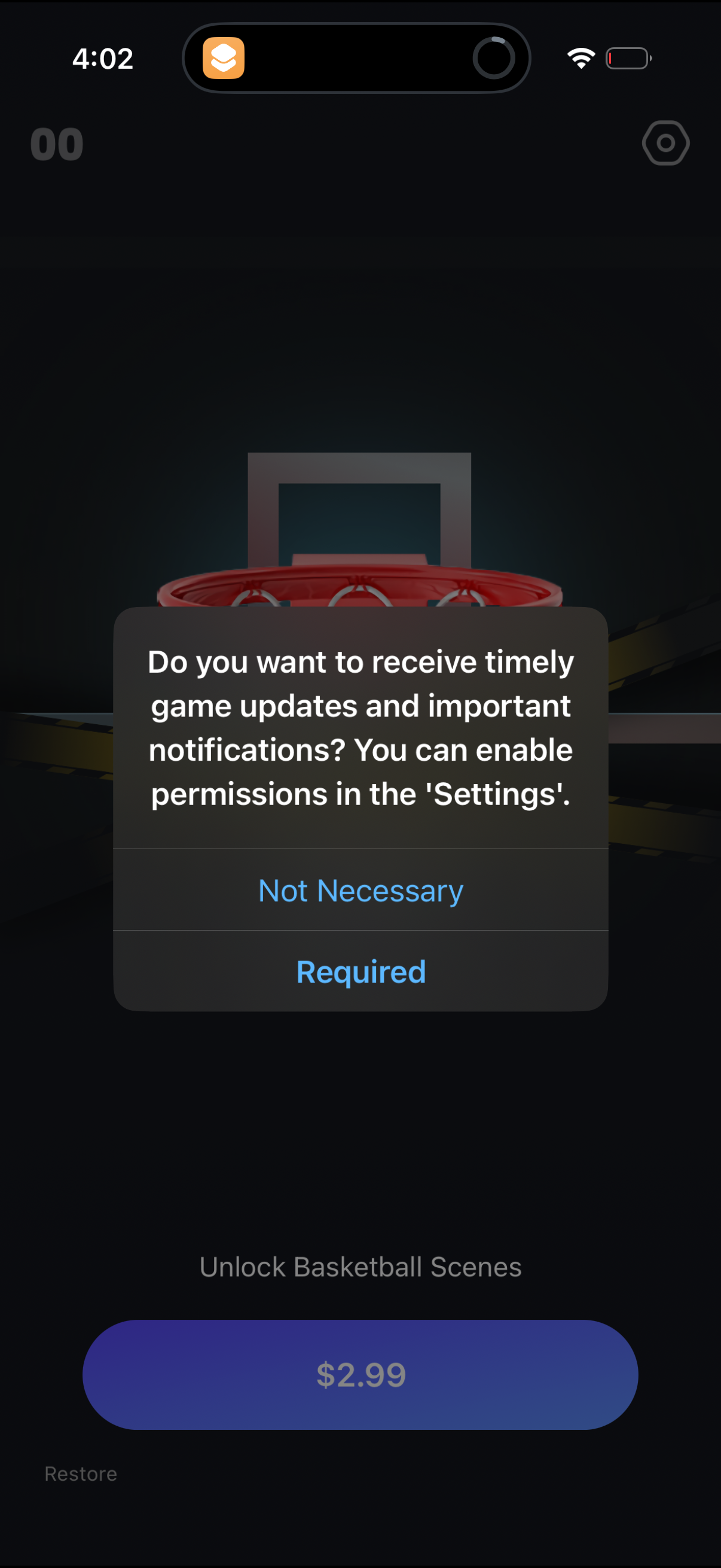
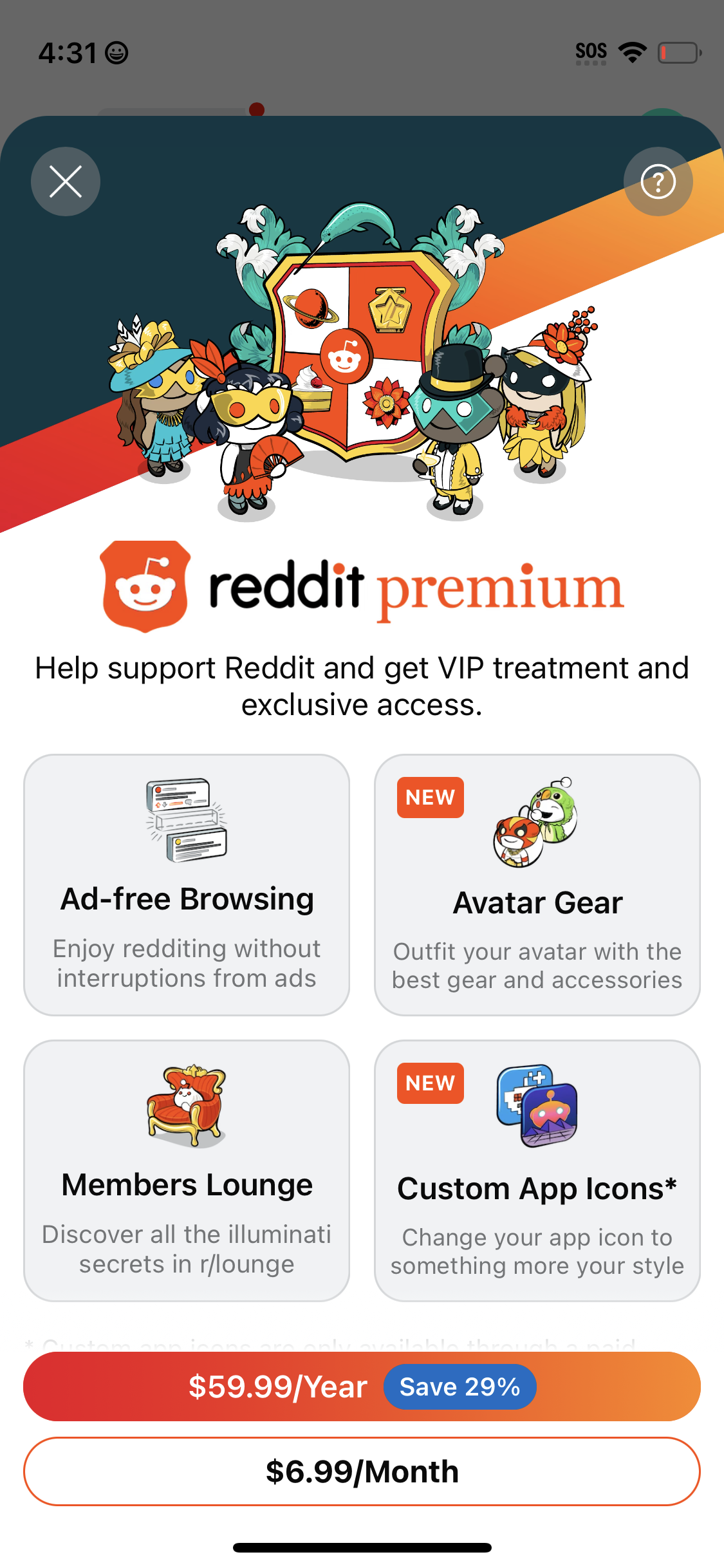
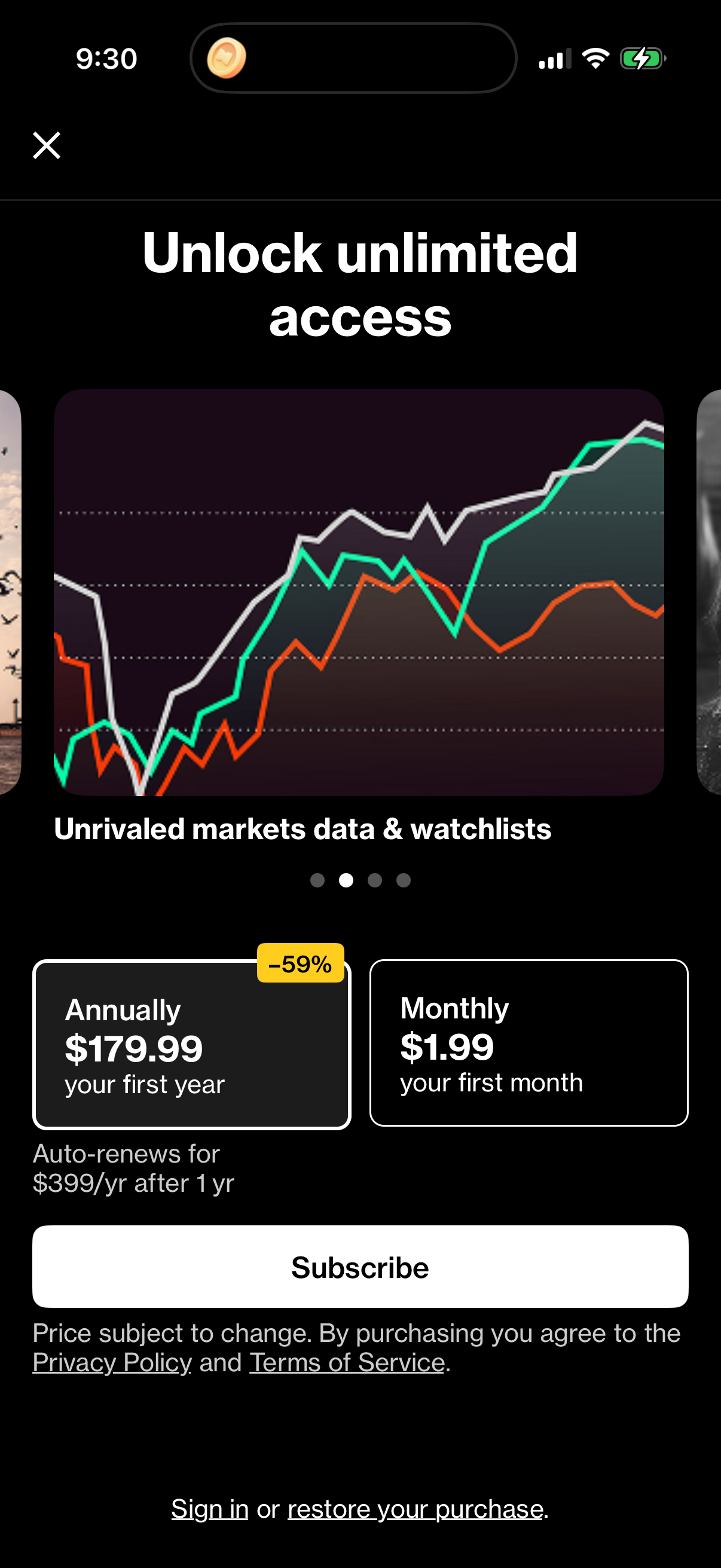
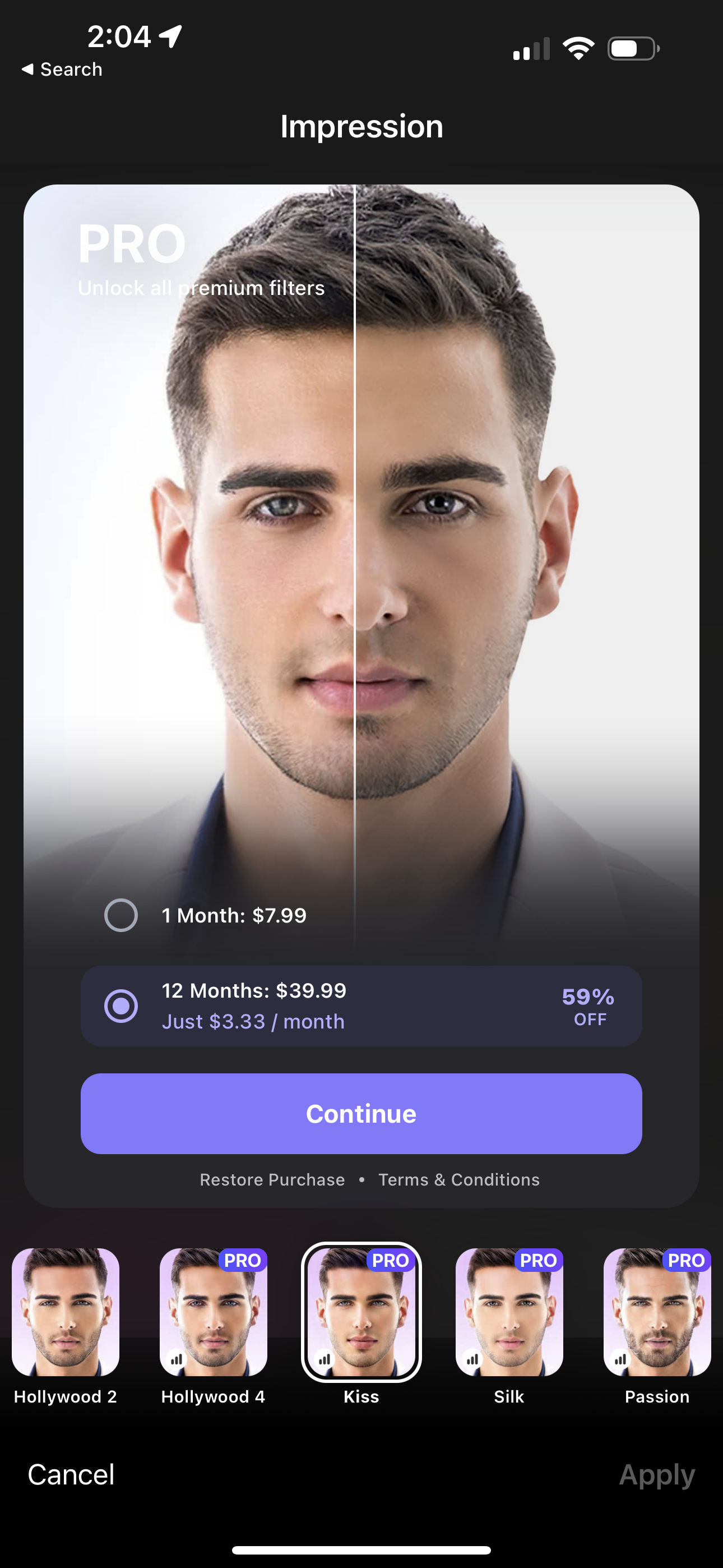
Most paywalls (70%) are direct with no price in the button; putting a price in the button is the exception in every quadrant. Source: Lazyweb Research, 630 paywalls.
| Quadrant | Contents |
|---|---|
| Trial-led / No price in button | Trial-led · no price — 108 (17%) |
| Trial-led / Price in button | Trial-led + price — 20 (3%) |
| Direct (no trial) / No price in button | Direct · no price — 443 (70%) |
| Direct (no trial) / Price in button | Direct + price — 59 (9%) |
| Item | Share of 1,886 |
|---|---|
| Mentions 'free' or 'trial' (any) | 33.7% |
| Names an explicit free duration | 16.8% |
| Abstract only (no duration) | ~16.9% |
The finding
317 of 1,886 primary CTAs (16.8%) state a specific free duration or free unit in the button text [1]. Compared with the 635 CTAs (33.7%) that mention 'free' or 'trial' at all [2], roughly half of trial-mentioning buttons commit to a concrete number of days, a week, or a month. The other half keep it abstract.
Abstract vs. specific trial buttons
| Trial framing | Primary CTAs | Share of 1,886 |
|---|---|---|
| Mentions 'free' or 'trial' (any) | 635 | 33.7% |
| Names an explicit free duration | 317 | 16.8% |
| Abstract only (no duration) | ~318 | ~16.9% |
Abstract examples: 'try for free' (74 CTAs), 'start free trial' (84). Specific examples surface in the leaderboard too — 'try 3 days free' (34) — though that one is a single company, so read duration examples with the company caveat [3].
How to apply it
Naming the length ('Start Your 7-Day Free Trial') makes the offer concrete and can pre-empt the 'how long is this really free?' hesitation. It's a moderately common pattern (one in six primary buttons), so it won't look odd. But it also lengthens the button and locks a specific number into the copy — if your trial length changes across markets or experiments, an abstract 'Try for Free' is more durable. Match specificity to whichever reduces friction for your users, then test.
Caveats
Explicit-duration matching uses a regex for patterns like '[N] days free' and 'free week/month/trial', so unusual duration phrasings may be missed. Denominator is 1,886 primary CTAs; 39% of the 4,406 corpus is role-unknown [4]. Several duration strings (e.g. 'try 3 days free', 'redeem your free week') come from single heavily-screenshotted apps — pair any single phrase with its company count before treating it as a norm [3].
The numbers
| Stat | Computed from |
|---|---|
| 317 of 1,886 primary CTAs name an explicit free duration (16.8%) | statpack explicit_trial_duration_primary |
| 635 of 1,886 primary CTAs mention free/trial (33.7%) | statpack free_or_trial_mention_primary |
| try 3 days free 34 CTAs/1 co; try for free 74/16; start free trial 84/22 | statpack primary_leaderboard_top10 + qualitative |
| 1,727 of 4,406 CTAs role-unknown (39%) | statpack role_distribution |
Sources & citations
- [1] Lazyweb Research analysis of 1,886 primary paywall CTAs (from ~800 tracked mobile apps), July 2026. Explicit-duration regex on lower(cta_text); abstract share is the difference from the free/trial mention count. ↩
- [2] Lazyweb Research analysis of 4,406 paywall CTAs (from ~800 tracked mobile apps), July 2026. Corpus of extracted paywall CTAs; per-phrase company counts included. ↩
Source: Lazyweb Research — proprietary analysis of real, in-market app screens. Cite as Lazyweb Research, 2026-07-07.